
Key Points
- The Nightshade Edition adds blacked-out styling and 19-inch wheels that give the Prius Plug-in Hybrid a noticeably more confident, upscale look without changing its efficient core formula.
- With useful electric-only range and a smooth transition to hybrid operation, it works seamlessly as both an EV commuter and a long-distance hybrid.
- The latest Prius is genuinely pleasant to drive, pairing responsive acceleration with a comfortable, daily usability.
Finally, a head-turning Prius
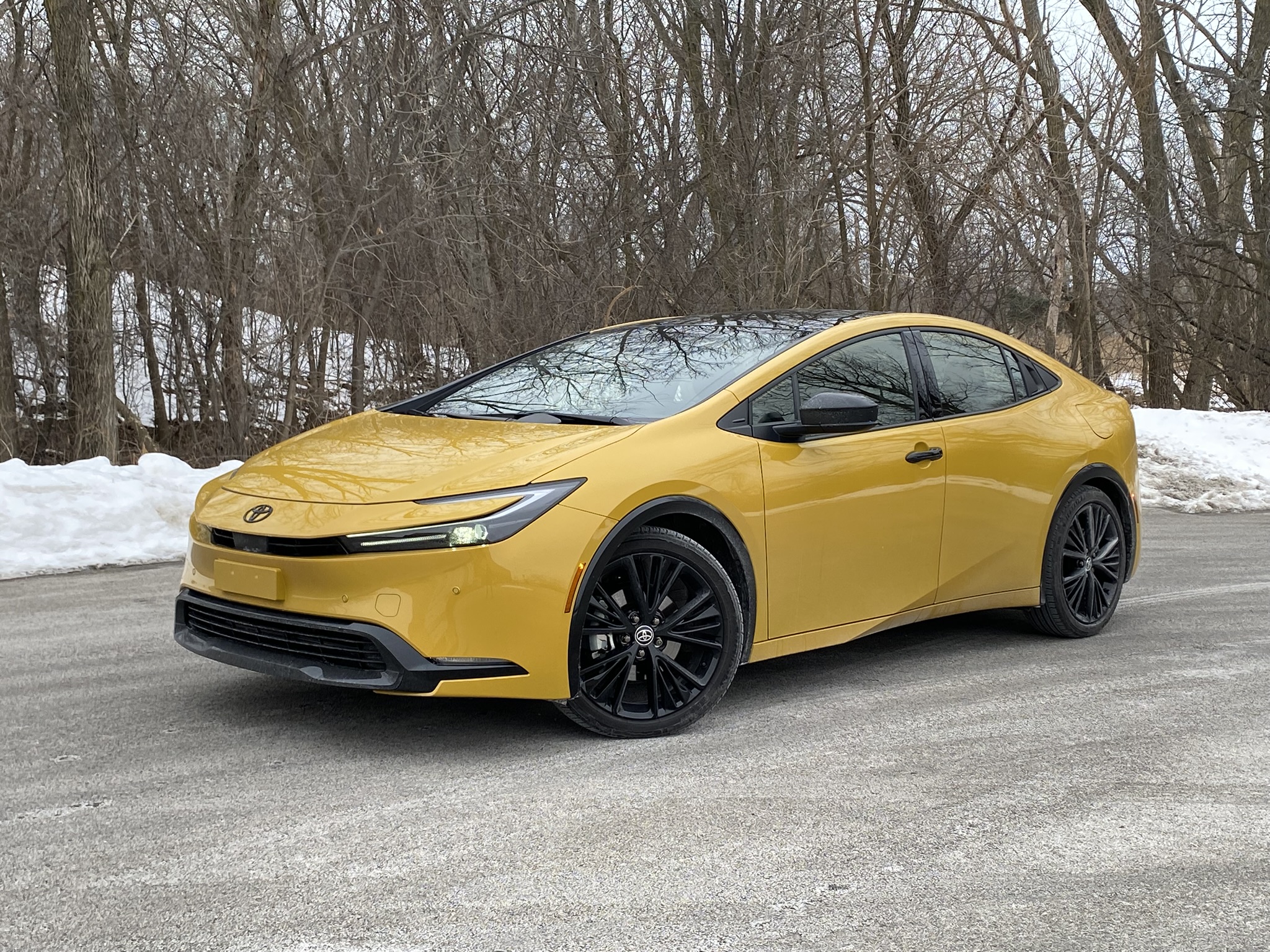
The current-generation Prius marked a turning point for the world’s most famous hybrid. What was once defined primarily by efficiency and weird styling, has been reshaped into something that looks modern, and downright racy. The 2026 Prius Plug-in Hybrid builds on that transformation by adding 45 miles of electric-only capability to the mix, while the new Nightshade Edition pushes the design further toward the style-forward end of the spectrum.

Amos Kwon
The Nightshade trim is new for 2026, and it ups the ante of the Prius’s already handsome look. It is still a compact plug-in hybrid hatchback designed to minimize fuel use, maximize ease of ownership, and manage daily life with aplomb. With blacked-out exterior elements, dark wheels, and a more cohesive visual identity, the Nightshade Edition is for buyers who like the idea of a plug-in hybrid but want something that looks less eco-friendly and more night on the town.
My tester’s starting price was $37,795. Standard feature highlights included 19-inch black alloy wheels, black badges, black exterior door handles, Bi-LED headlights, SofTex-trimmed and heated front seats, a heated steering wheel, a 7-inch digital gauge cluster, a wireless phone charger, and Toyota Safety Sense 3.0. Upgrades included a fixed glass roof ($1,000), a digital key ($275), and a 12.3-inch infotainment screen ($610). The total price, including a $1,195 destination charge, came to $41,304.

Exterior and Interior Styling – 8.5/10

Amos Kwon
The Nightshade Edition works because the underlying Prius design is stunning, the best the model has ever been, quite literally. I’d like to say the weirdness of the old models is a distant memory, but those eyesores are everywhere, damn their reliability. This time around, Toyota made the Prius actually look sexy (and not like a pregnant spacecraft) and the Nightshade trim adds to that factor. The low nose, sweeping roofline, and clean body surfacing give the car a planted, almost concept-like look that still feels unusual in the compact car segment. Adding black exterior accents sharpens the look.

Amos Kwon
Black badging, dark trim pieces, and black 19-inch wheels give the Prius Plug-in Hybrid a more serious presence. The Karashi yellow paint (my barber called it “baby chicken”) is the perfect contrast for the darker wheels and trim. The wheels, in particular, change how the car reads from a distance. They visually lower the car and help balance the tall rear section that is inherent to the Prius shape. The result is a vehicle that looks wider and more composed than previous generations ever managed.

Amos Kwon
Inside, the Prius is far better than the last-gen model, but with some issues. Overall, the styling is far less polarizing and more conventional. The clean dash and legit center console are pleasing to the eye, although the only interior color available on the Nightshade is black. I guess that keeps with the trim name, but it’s awfully bleak inside.

The door cards are, to say the least, quite boring. Their styling is clean, but there’s very little that’s interesting. The short Lexus-like shift knob looks great, and the console buttons and drive mode switch are nicely minimalist. The instrument display looks futuristic, borrowed from the bZ EV, but its actual location (rather than its appearance) leaves much to be desired.
Technology and Infotainment – 8/10

Amos Kwon
Toyota’s latest infotainment system is a clear improvement over older interfaces, and the Prius Plug-in Hybrid benefits from the change. The touchscreen responds quickly, menus are logically laid out, and basic functions do not require unnecessary digging. The left vertical menu is easy to understand, and the display remains visible even in bright sunlight. The audio volume knob is strangely parked away from the driver. Wireless smartphone integration works well and helps bridge the gap for drivers who prefer familiar apps over native systems.

Amos Kwon

Amos Kwon

Amos Kwon

Amos Kwon
Now, to address that instrument display. As handsome as it looks, its location is the Achilles’ heel of the Prius’s tech set. All too much, it dictates your seating position. It’s not well situated to look at over the top of the wheel, but it’s even worse to try to peer through the wheel to see it. I ended up pushing the adjustable steering column all the way down and out in order to see over the top. Part of the problem is the size of the steering wheel hub, which seems abnormally tall.
Plug-in-specific tech is handled intelligently. The Prius allows you to choose between EV driving, hybrid operation, or an automatic mode that blends the two. The system does a good job of staying in electric mode during low-speed and light-load driving, then transitioning smoothly when more power is needed. There is no sense that you have to constantly manage the car to get the best results.
Driving Experience – 8/10

Amos Kwon
The most surprising thing about the latest Prius Plug-in Hybrid is how normal and composed it feels from behind the wheel with the primary issue being the noise level when the car is pushed. The combination of a 2.0-liter engine and Toyota’s latest hybrid system delivers a total output of 220 horsepower. While it doesn’t feel super-quick, it’s far more powerful than the last Prius PHEV (Prius Prime), whose 121 horses felt downright gutless. In the FWD-only Prius Plug-in Hybrid, wheelspin happens far too often for my liking. When there’s sufficient traction, acceleration is smooth and confident, especially at city speeds where electric torque does most of the work.

Amos Kwon

Amos Kwon
In EV mode, the Prius is quiet and responsive, making it well-suited to commuting and short trips. The 45-mile electric range is sufficient for many drivers to complete round-trip commutes and daily errands without using any gasoline at all. When the battery is depleted, the transition to hybrid operation is subtle, avoiding the abruptness that older hybrids sometimes exhibited.
Handling is competent, far better than older Priuses. It feels balanced and composed, if not sporty. The low center of gravity helps the car feel decently planted through corners, and the suspension strikes a good balance between control and comfort. Steering is light but pretty accurate, making the Prius easy to place in turns and through traffic. It’s a nimble and generally fun little number, but it’s no Civic Hybrid.
Space, Comfort, and Usability – 7.5/10

Amos Kwon
The Prius Plug-in Hybrid remains a compact car at heart, and its sleek profile does come with trade-offs, especially for rear occupants. Those in front have plenty of space, despite the severely raked front windscreen, and the seating position feels natural and supportive for long drives. The seats might look boring, but they’re quite comfortable. The lower roofline improves exterior aesthetics but slightly limits rear headroom, particularly for taller passengers.

Amos Kwon

Amos Kwon

Amos Kwon

Amos Kwon
34.8 inches of rear legroom is acceptable for shorter adults and kids, though this is not the most spacious option in the segment. For families with children or frequent rear-seat use, it works well enough, but it is not the Prius’ strongest attribute. At least the rear seats are well-cushioned with comfortable backrests. There’s a small floor bulge for the middle passenger, but it’s not overwhelming. Cargo space is solid thanks to hatchback practicality. The PHEV provides 20.3 cubic feet and a larger 26.7 cubic feet with the back seats folded down.

Amos Kwon
Could the Prius be larger inside? Sure. The greenhouse has shrunk due to the sleeker profile, but that doesn’t make it impractical. We’d take the look of the new Prius over more rear headroom any day. Road noise is well controlled, ride quality is compliant and visibility is good once you adjust to the unique shape and instrument cluster. The Prius Plug-in Hybrid is great for daily duties for two and “good enough” for four.
Final Verdict – 8.5/10
The 2026 Prius Plug-in Hybrid Nightshade Edition looks like a little sports car but delivers all-electric driving and efficiency that belie its slick appearance. The little black details on the car aren’t just window dressing, though. It remains fun to drive without compromising its fuel economy and its ability to go without gas on most days. There are some cabin misfires, namely with the instrument cluster, but it’s still a remarkably easy vehicle to live with. Add in unbeatable reliability, solid cargo space, and a great price, and you have yourself a truly appealing PHEV.
About the author
Amos Kwon
Contributing Writer, Autoblog