
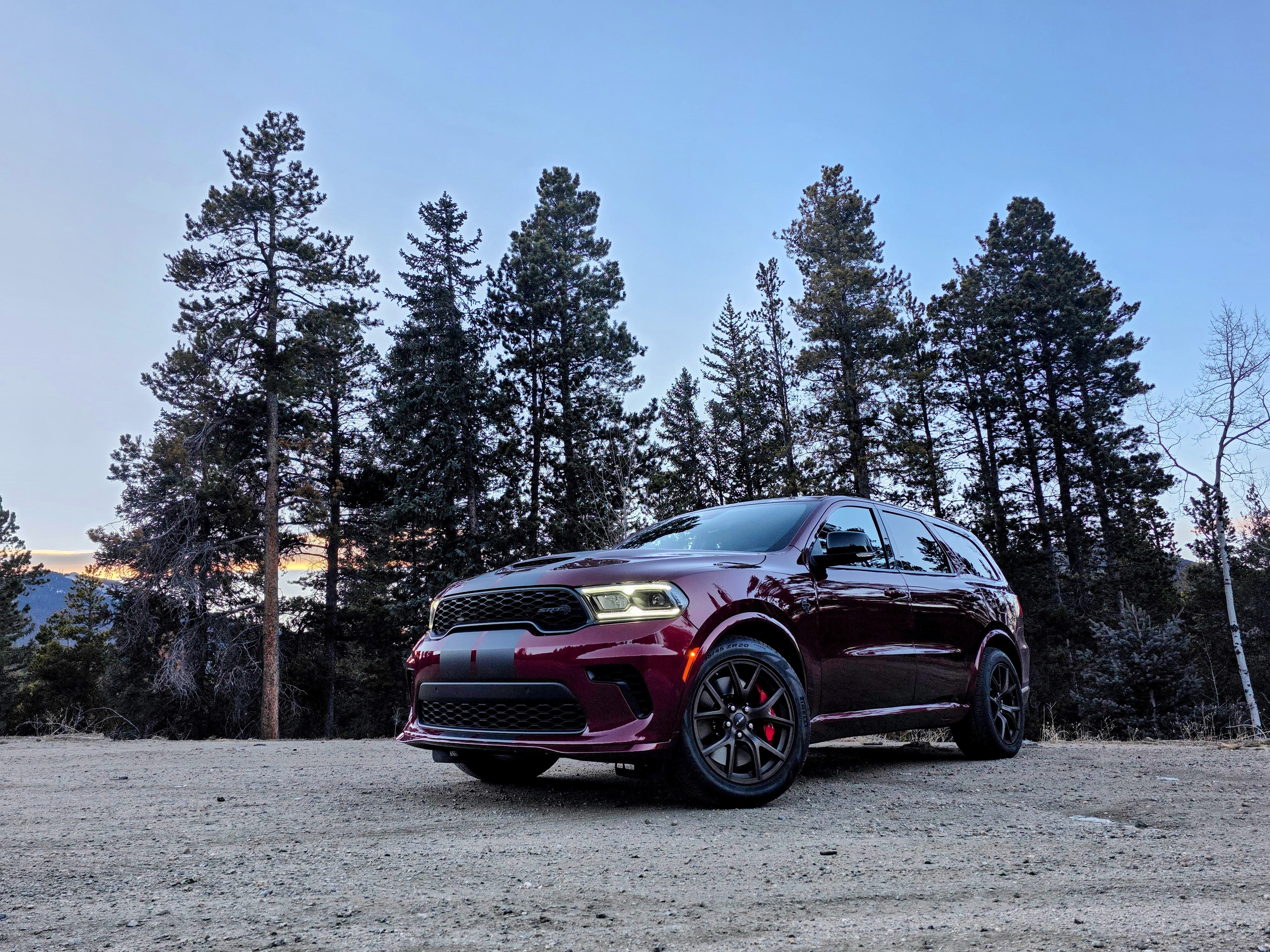
By all logic, the 2026 Dodge Durango SRT Hellcat Jailbreak should not exist. In an era where manufacturers are racing to release the quietest, most efficient electric vehicles possible, it feels like a dinosaur roaring at an incoming meteor. It is loud, unapologetically thirsty, and easily one of the most entertaining SUVs you can drive. It burns fuel like it has a personal grudge against the U.S. Environmental Protection Agency, and honestly, that is part of the appeal.
Kyle Edward
The Durango SRT Hellcat Jailbreak was originally meant to be a one-year send-off back in 2021. Demand for the Hellcat engine, however, refused to die, so Dodge kept production alive to bridge the gap between the outgoing V8 era and the brand’s electrified future. My first impression was simple. It leans completely into what Dodge does best: absurd power and performance that feel like a bargain for what you get. At heart, it is still a muscle car, just one with enough space for a large dog, a full family, and a bulk run to Costco without breaking a sweat.
Powertrain and Engineering Deep Dive: 10/10
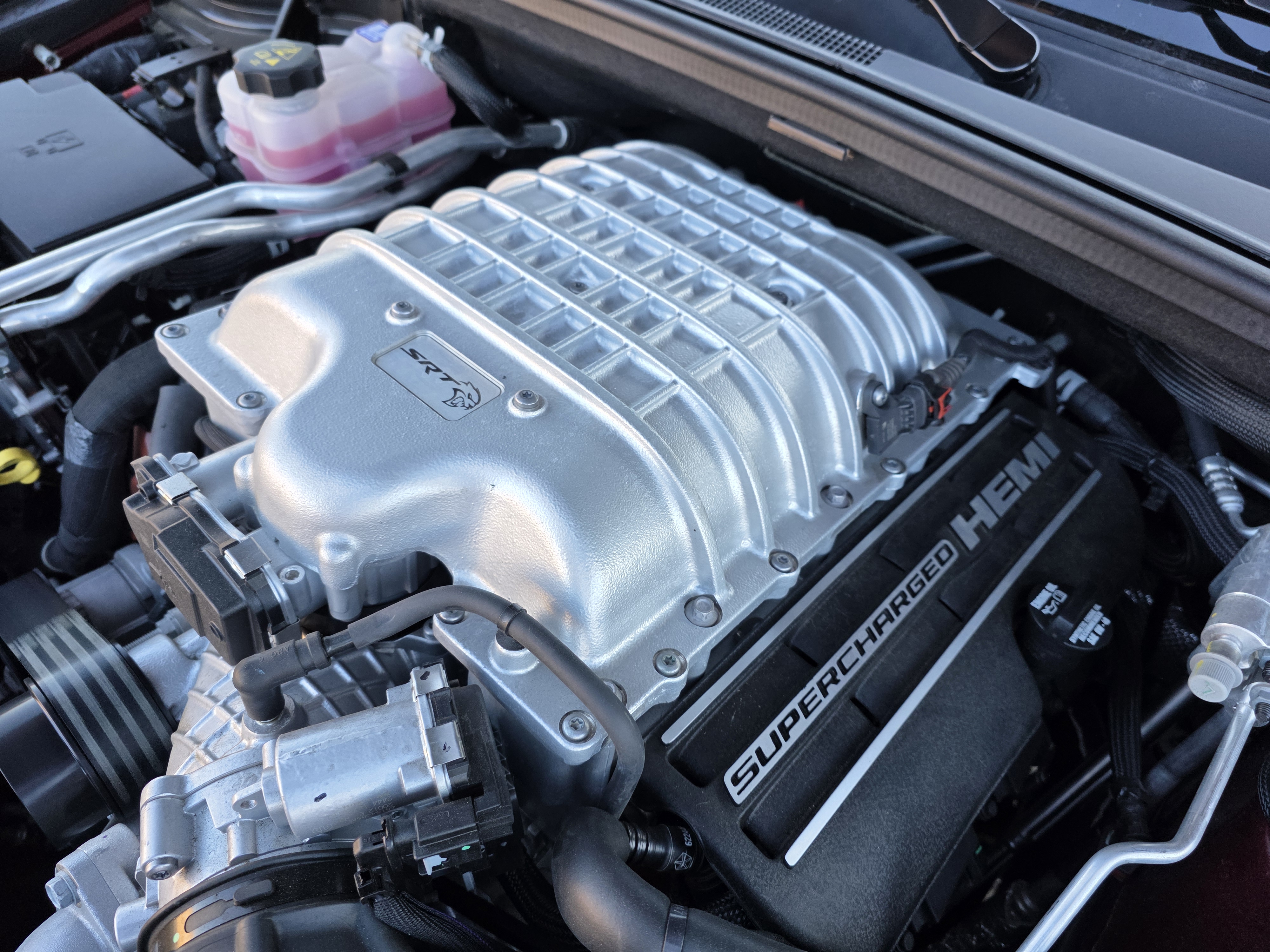
As with previous model years, the 2026 Dodge Durango SRT Hellcat Jailbreak is powered by a 6.2-liter supercharged HEMI V8, rated at 710 horsepower at 6,100 rpm and 645 lb-ft of torque. Rather than employing the complex twin-turbocharging strategies common among European competitors, Dodge utilizes a large 2.38-liter IHI positive-displacement supercharger. Why does that matter? Turbochargers rely on exhaust gas to spin up, which creates a delay between pressing the throttle and feeling the surge. A supercharger is driven directly by the engine’s crankshaft, delivering boost instantly.
Kyle Edward
All that power runs through a TorqueFlite 8HP95 eight-speed automatic transmission. But this is not a typical family-SUV gearbox. It has been reinforced to survive the engine’s massive output without self-destructing. Power goes to all four wheels, ensuring those 710 horses translate into forward motion instead of clouds of shredded rubber. The suspension uses specially tuned Bilstein adaptive dampers that constantly read the road and adjust firmness in milliseconds. In Track mode, everything tightens to control body roll. In Street mode, it softens to absorb bumps and broken pavement. Without this system, a 5,000-pound SUV with this much power would feel completely unruly.
The Driving Experience: 10/10
On the road, the numbers translate into a machine with a clear split personality. Around town, it behaves far more calmly than you would expect. Press the throttle hard, though, and things escalate very quickly. Acceleration from 0 to 60 mph takes about 3.5 seconds, which is supercar territory. The supercharged V8 delivers power in a smooth, relentless wave that pulls hard all the way to redline. It does not feel clinical or computerized. It feels raw, like something mechanical and slightly unhinged is doing the work.
The transmission plays along perfectly, delivering firm, decisive shifts in Track mode while staying unobtrusive during normal cruising. Steering is heavy but predictable, and the near-balanced weight distribution helps it feel more composed than a vehicle this size should. It is not surgical like a BMW X5 M. It is more of a blunt instrument.
One of the most surprising traits is its towing ability. Rated at up to 8,700 pounds, it leads its class. You could literally tow a dedicated track car while driving something that feels like one in a straight line. That level of real-world usefulness almost makes the outrageous engine seem reasonable.
Exterior Design & Features: 7/10
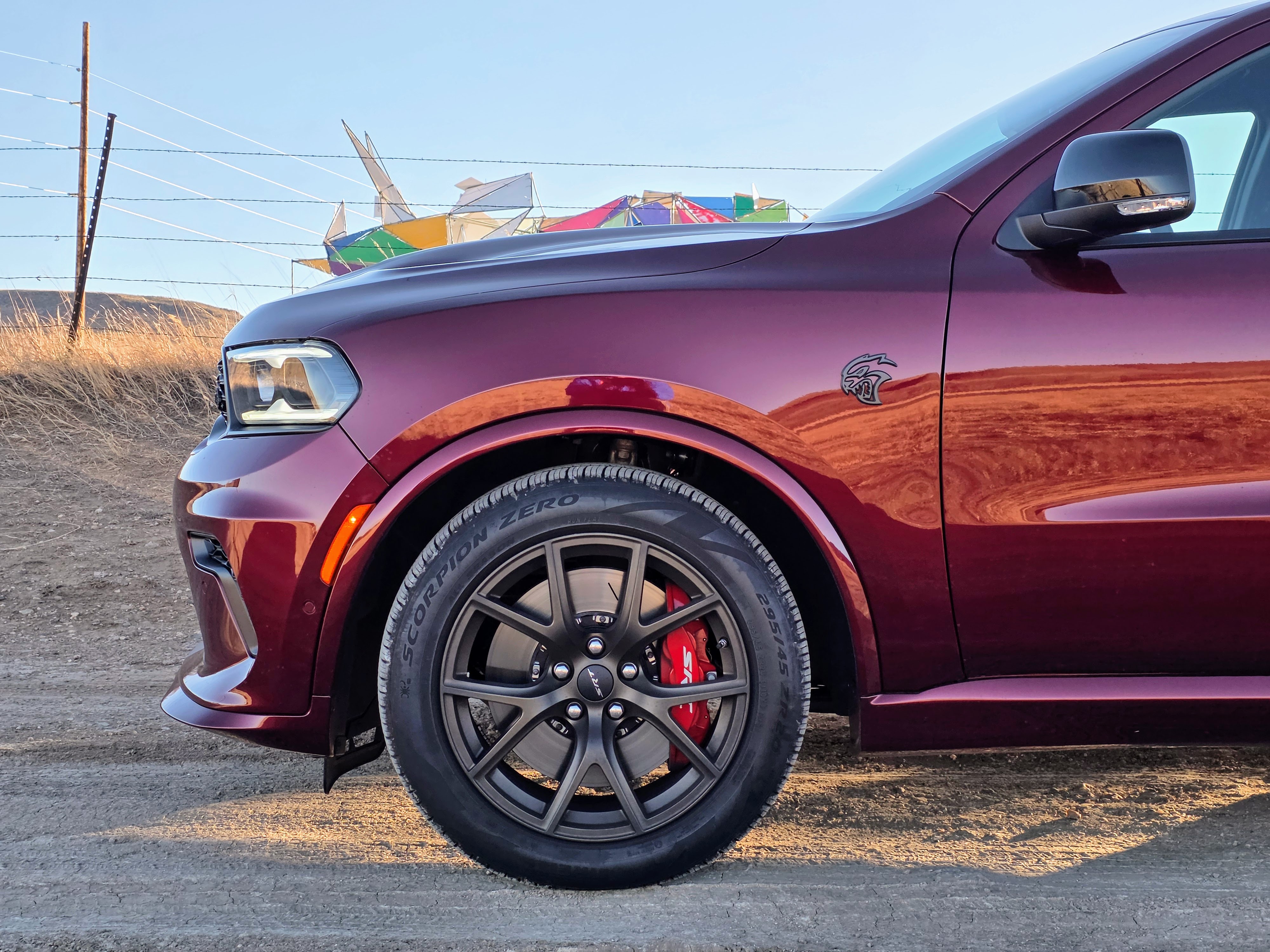
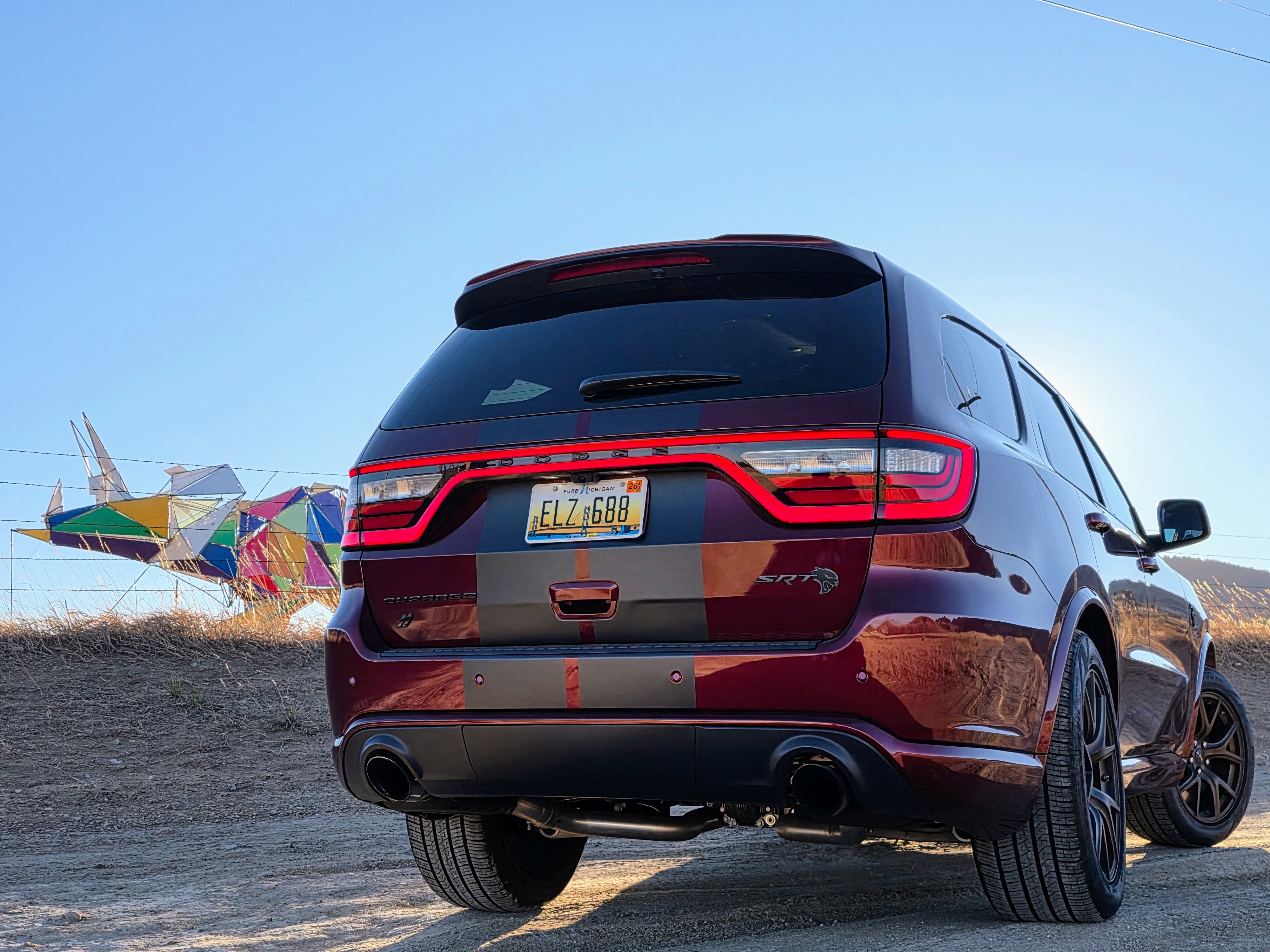
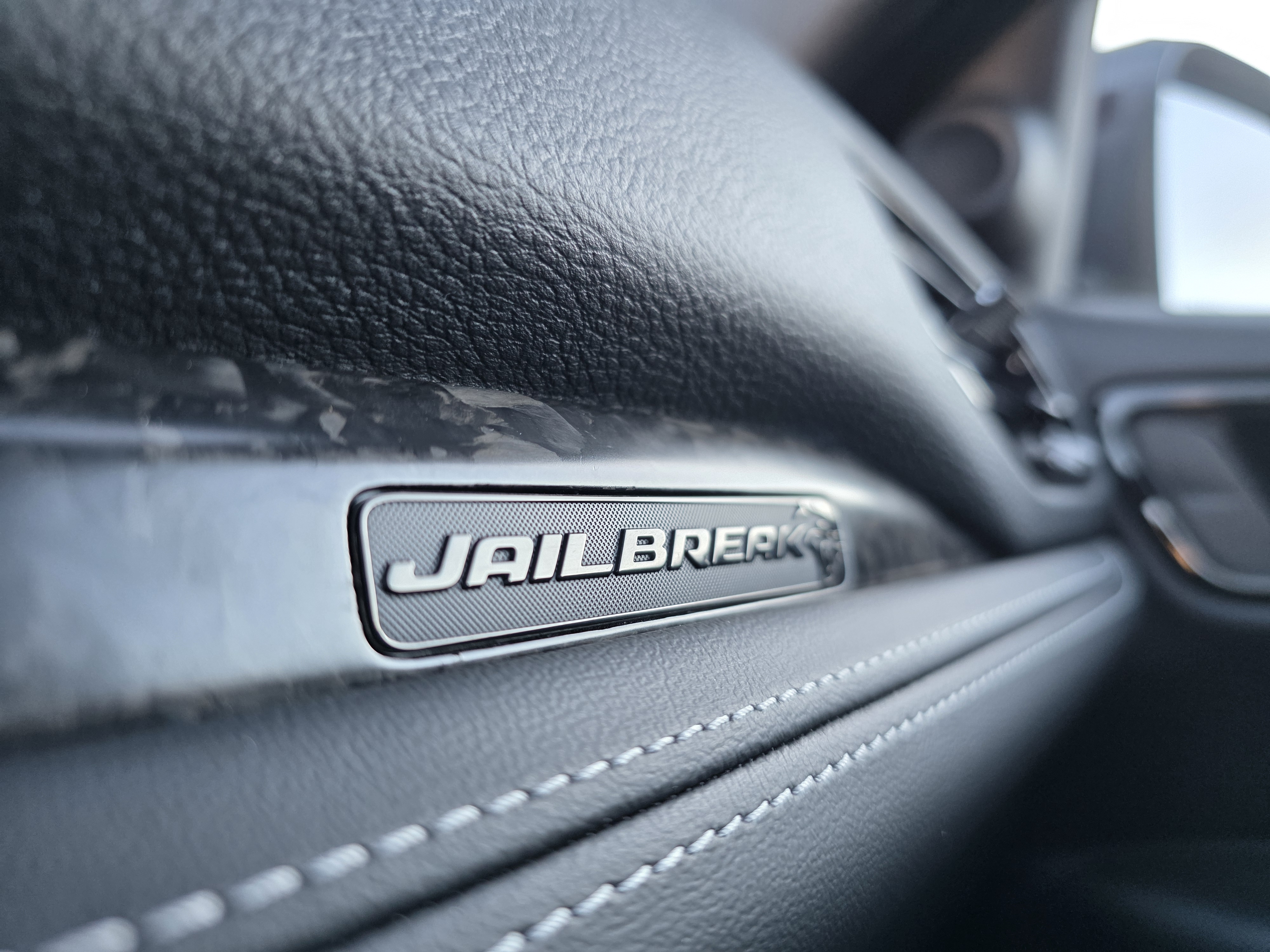
This is where the Durango starts to show its age. However, it still looks aggressive, no question. The widebody stance, functional hood scoops feeding the supercharger, and massive Brembo brakes behind the wheels all communicate serious intent. The Jailbreak program is one of its most entertaining features. It opens the door to genuinely wild color and trim combinations. You can pair a bright green exterior with deep red seats and bronze wheels, creating a look that would have been unthinkable a decade ago. It gives owners real freedom to build something unique instead of another cookie-cutter performance SUV.
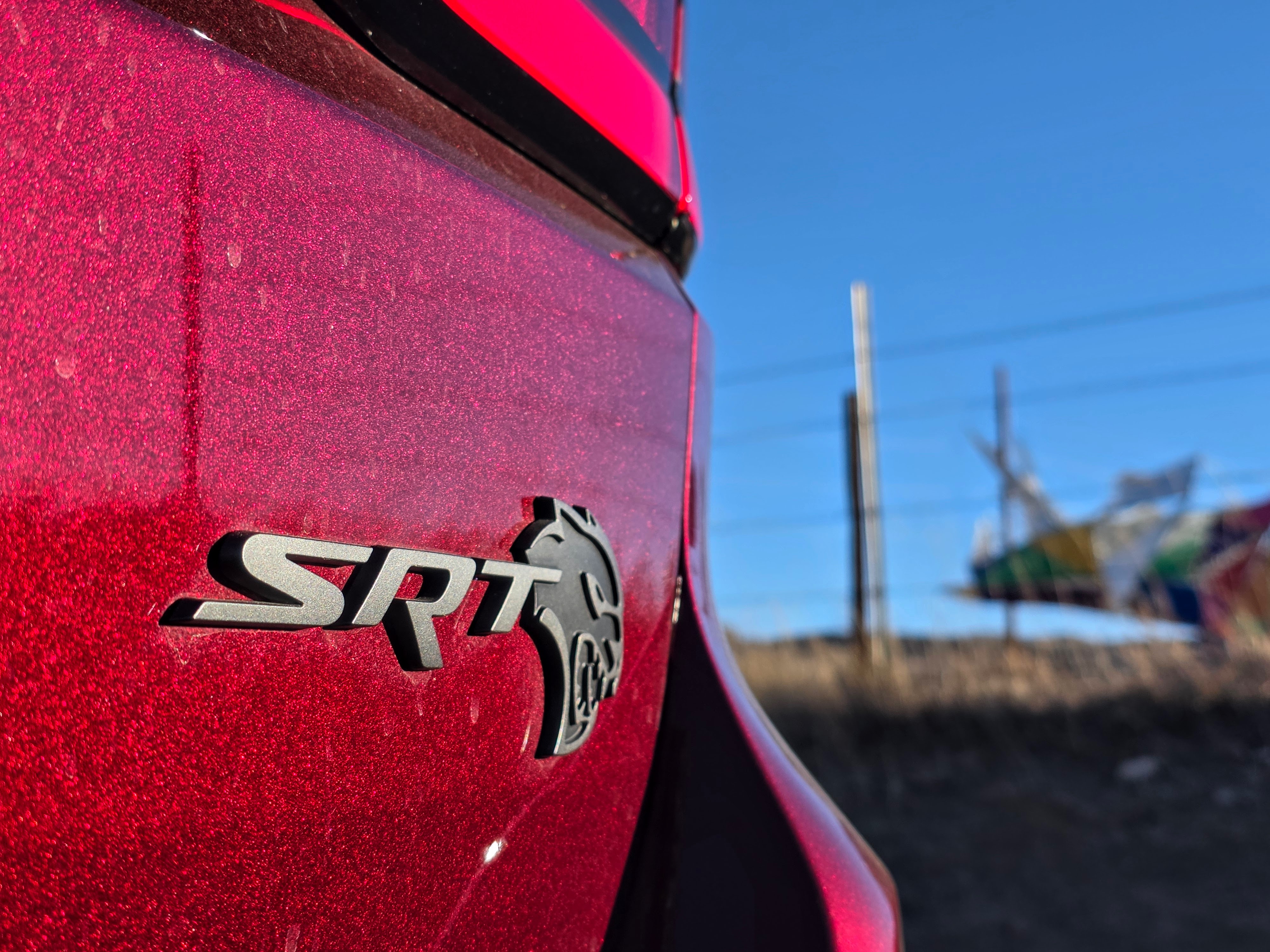
Park it next to something newer from Audi or Cadillac, though, and the underlying age becomes obvious. The Durango still looks tough, but the proportions and details trace back to an older design era. No amount of stripes, wheels, or blackout trim can fully disguise that the platform itself is getting long in the tooth.
Interior Design, Tech, and Ergonomics: 7/10
Inside, the story continues with a mix of strengths and compromises. On the plus side, the Uconnect 5 system is genuinely excellent. The 10.1-inch touchscreen is quick, clear, and easy to navigate. Even better, there are still real buttons and knobs for key functions like climate and volume. In an age where many brands hide basic controls inside endless menus, this feels refreshingly practical. Credit where it is due: Dodge understands that muscle-car buyers still appreciate tactile controls.
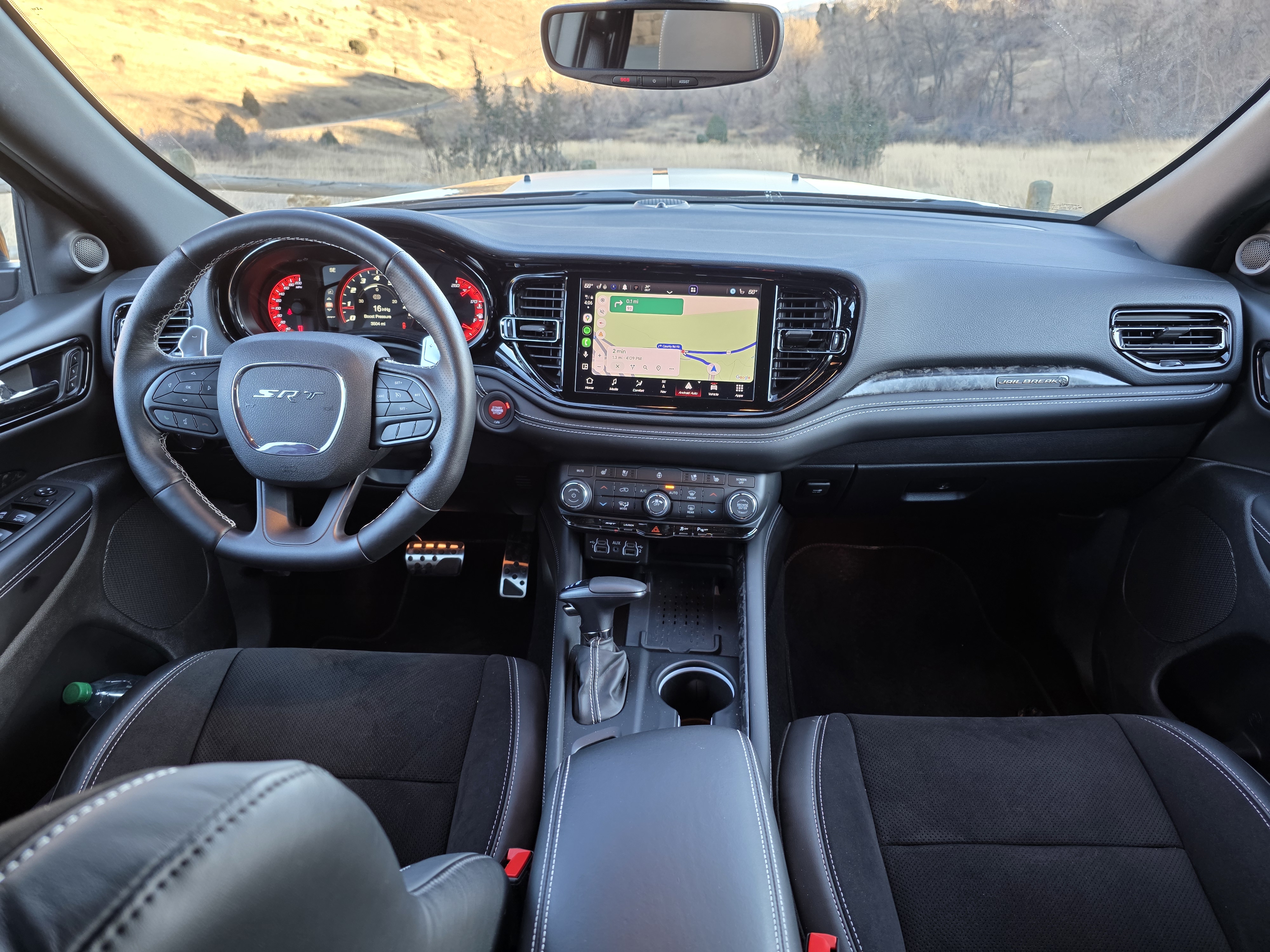
The seats are soft and supportive, holding you in place when you drive aggressively. But once you look beyond the main touchpoints, the illusion weakens. Lower door panels and parts of the center console are made of hard plastics that feel out of place in a six-figure vehicle. For the price, you expect materials and fit that match the performance, and this cabin does not quite get there. Ultimately, it feels like an incredible engine and drivetrain wrapped in an interior that is overdue for a redesign.
Pricing, Fuel Economy, and Practicality: 10/10
Let’s talk money. The 2026 Durango SRT Hellcat Jailbreak starts at about $107,200. That sounds steep, but context matters. Its main rivals, the BMW X5 M Competition and the Audi RS Q8, start at around $124,800 and $125,800, respectively. The over-the-top Cadillac Escalade‑V pushes well past $150,000. Viewed that way, the Dodge delivers serious performance value. You are getting 710 horsepower for roughly twenty grand less than the German alternatives.
EPA estimates sit at 12 mpg in the city, 17 on the highway, and 13 combined. In real-world driving, especially if you enjoy the supercharger, single-digit mileage is entirely possible.
Where the Durango redeems itself is in practicality. Unlike coupe-style SUVs that sacrifice space for looks, this one offers a genuinely usable third row for adults and up to 85.1 cubic feet of cargo capacity. It can haul a family and luggage and still feel like a proper performance machine. In terms of everyday usability, it is far more functional than its stats might suggest.
Final Verdict: 8/10
Praise the heavens that Dodge still possesses the sheer audacity to build this brute, as it plasters a grin across your face the moment you prod the throttle. Let the timid complain that the cabin lacks the delicate finery of a European cruiser, or whine that the sheet metal has looked largely the same since the dawn of the last decade. Such trivialities evaporate the instant that the supercharged leviathan clears its throat. For a fraction of the cost of its pedigreed rivals, it delivers a deeply visceral, soul-stirring theater that they simply cannot replicate. Truly a gift to those of us who still believe driving should be an event.
About the author

Kyle Edward
Editor-in-Chief, Autoblog