
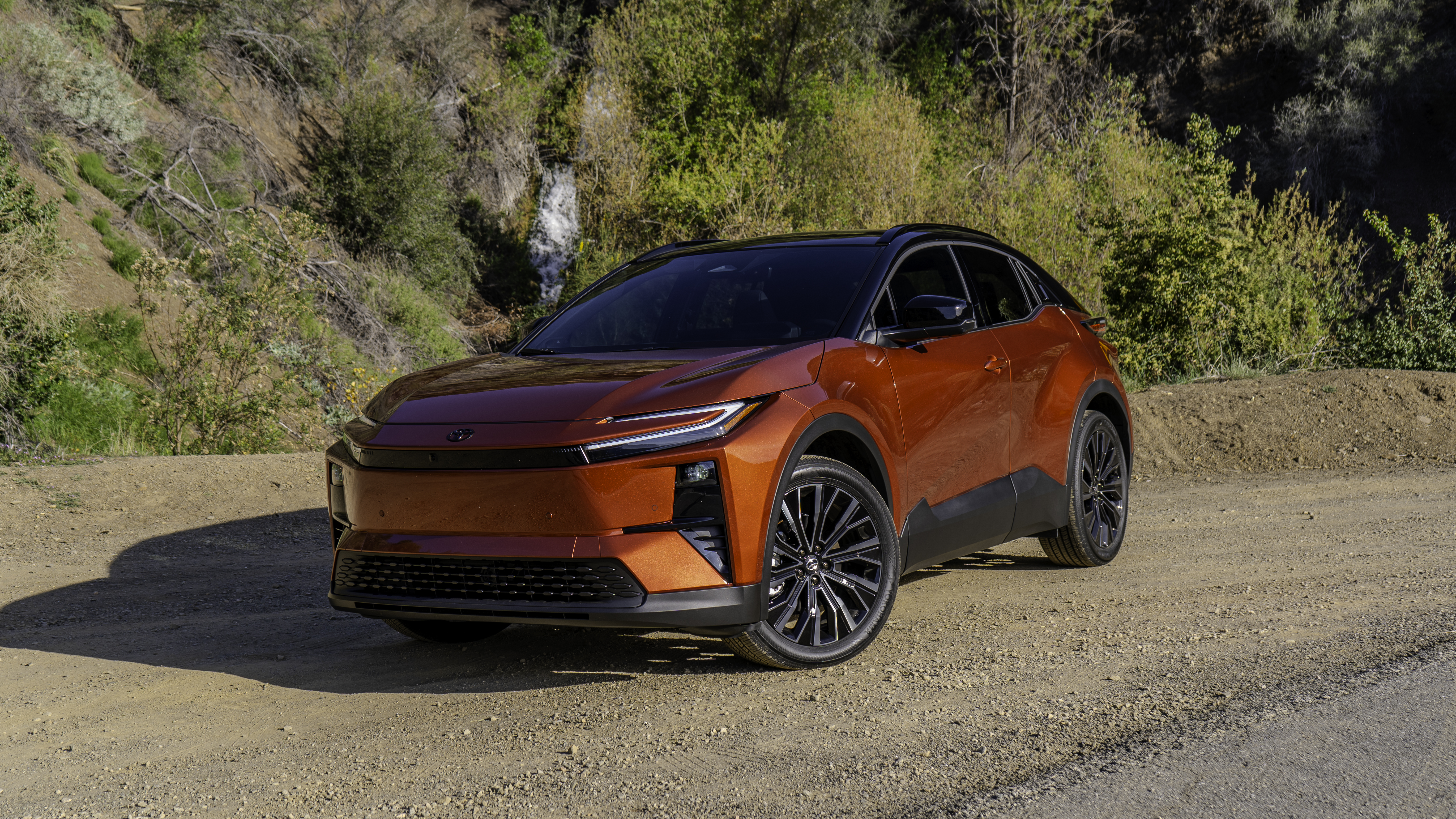
There’s an old idea—romanticized by road movies, Hollywood mythology, and more than a few cheesy car ads—that if you put someone behind the wheel on the right stretch of pavement, the truth about the car they’re driving will eventually surface. Not the brochure kind of truth, nor the spec-sheet truth. Rather, the kind of truth that makes Hemingway or Hunter S. Thompson’s prose so authentic, even if they happen to be telling a lie. How a car makes you feel in the palm of your hands, on your skin, in the sensibilities of your logic and reasoning, and, perhaps most importantly, in your heart, is rarely agreed upon by different drivers. What matters most, then, is whether a car is at all capable of making you feel anything remotely memorable. California’s roads have always been good at exposing that kind of thing, and so there was no location more fitting than the lovely small town of Ojai, which lies just south of Santa Barbara, to give the all-new, fully-electric 2026 Toyota C-HR a good ol’ fashioned romp through the hills.

Cole Attisha
Can a sensible electric SUV deliver utmost utility and still be fun to drive?
Electric vehicles are not often capable of making me feel much, if anything at all, in the way of raw, unfettered emotion. They don’t often deliver the good stuff. You know, that moment when your inner dialogue finally shuts the hell up, and maybe you take a second to gather a sense of your surroundings, and you begin to feel the tingle of the sun’s warm rays beaming in through a panoramic moonroof, or even an open convertible top. Suddenly, the car’s engine seems to roar, and it even feels more eager, and you can finally smell the freshness in the air that rushes in through half-opened windows.
Like the eye-watering hit of an overzealous portion of wasabi, some cars—truly special ones—can actually heighten all of your senses. EVs, though, designed as they are to detach your mind and body from the imperfections of the road and the inconsistencies of fellow road users, more often than not, dilute such a motoring experience down to artificial noises and eerily disconnected road manners, and sense becomes a matter of forced effort rather than enjoyed pleasure.
At first glance, the all-new Toyota C-HR, now a fully electric SUV, certainly does not seem like the kind of car that would even raise one’s hopes for a memorable experience. After all, this car is, at its core, one designed with sensibility at the forefront of its mission. What matters most here is efficiency, range, comfort, safety, and utility. All very boring stuff. However, when Toyota’s PR folks conducted their walkaround of the car, they insisted that what would make the C-HR stand out in its class was “sportiness.” They aimed to distill the livelier personality of a “coupe” into a package that could still work as a convenient everyday family car, and its sloped roofline and hidden rear door handles were meant to reflect that character. So, although I would pay close attention to the C-HR’s usability and real-world efficiency during my testing, I also knew I’d have to take Toyota’s bold claims as a challenge, and so I set off to discover whether the new C-HR could really live up to them.

Cole Attisha
A Design That Feels Familiar Yet Radically Bold
Toyota didn’t revive the C-HR nameplate in the U.S. just to fill another square on its growing EV lineup bingo card (although I’m sure that was a large part of it). According to the brand, this new, fully electric C-HR was conceived as an expression of the fun-to-drive character that electric vehicles are supposedly capable of, if engineered with the appropriate sense of direction. Constructed on Toyota’s dedicated e-TNGA battery-electric platform, the 2026 C-HR is positioned as the brand’s most style-forward and performance-leaning EV yet, sitting alongside the refreshed bZ and the new bZ Woodland in Toyota’s BEV lineup, and soon to be joined by the all-new Highlander EV.
The visual cues are a dead giveaway of Toyota’s sporting intentions. A wide stance, coupe-like silhouette, and low-slung roofline give the C-HR an athletic posture that immediately separates it from upright, appliance-grade electric crossovers. Toyota describes the look as “sporty” and “dynamic,” but more importantly, they’ve backed that up with hardware and tuning that suggest the C-HR is meant to be driven with some enthusiasm rather than simply piloted from charger to charger. This is not the C-HR you remember from Toyota, which once offered subpar cabin space, a design that was borderline offensive to the eye, and could not be had with all-wheel drive. This is something entirely new, and it’s all the better for it.

Cole Attisha
On the Road in California: Does The C-HR Live Up To Its Sporty Claims Behind The Wheel?
Toyota can call the C-HR sporty all it wants, but the truth would only really emerge once the road stopped going straight. On the winding stretches outside Ojai, the C-HR revealed a character that feels far less performative than most people might expect from an EV aimed at sensibility. The steering is quick without being nervous, the throttle response is immediate but not overwhelming, and the all-wheel-drive system worked hard to urge its rear end through each corner, even if there was a bit of understeer to keep me on my toes.
There’s a cohesion here that many EVs lack. Power delivery is smooth and linear, and although if you mash the throttle, it will absolutely pin you back in your seat, it’s not the neck-snapping one-trick-pony we’ve come to expect from electric vehicles chasing spec-sheet bragging rights. Instead, the C-HR encourages rhythmic driving—brake hard, turn with calculation, lean into power—that feels surprisingly natural for a compact electric SUV weighing well over two tons.

Cole Attisha
The C-HR’s composure isn’t limitless—it’s not like this is an Ioniq 5 N. Push harder, and the realities of physics reassert themselves. Understeer sets in under sustained cornering, and body roll becomes more pronounced as the pace exceeds what the chassis is happiest with. But crucially, those limits come well beyond what can reasonably be expected of an EV of this kind. It lets you know where the edge is, reassuringly, and politely asks you to respect it.
Compared to its rival classmates, the C-HR is far more compelling from behind the wheel. Although I appreciated how easy the 2026 Nissan LEAF was to drive when I tested it in autumn 2025, the reality is that the C-HR feels notably more dialled-in and refined when the roads get twisty, not to mention that it’s also far quieter and doesn’t suffer from the wind noise that the LEAF’s side-view mirrors create. Throw in substantially superior power figures, all-wheel drive, and a far more communicative steering feel, and the C-HR comes out on top as the obvious choice for buyers looking for a truly inspiring driving experience in their compact EV SUV. Those thrills, however, don’t necessarily come cheap…

A Brief Reality Check: Where Does The C-HR’s Price Tag Place It Against Rivals?
Of course, none of the C-HR’s excitement exists in a vacuum, and the specific C-HR I drove reveals where Toyota believes this car belongs in the market. While the 2026 C-HR technically starts at $37,000 before destination, whereas the LEAF can be had for under $30,000, the well-equipped XSE I tested tells a more realistic story. Finished in Tandoori with the Boulder interior, it carried a base MSRP of $39,000. From there, a handful of carefully chosen options nudged the price upward: a panoramic roof ($1,000), JBL premium audio ($600), a cold weather package ($450), and a two-tone exterior treatment ($500). Add Toyota’s $1,450 destination and handling fee, and the total came to $43,000 as tested.
That number inevitably places the C-HR above entry-level electric options like the Nissan LEAF or Chevrolet Bolt, but it also clarifies Toyota’s intent. This isn’t meant to be the cheapest way into an EV; it’s meant to be a more complete one from the get-go, offering standard all-wheel drive, legitimately quick acceleration, surprisingly thrilling driving dynamics, and a level of interior polish that makes the price feel deliberate rather than aspirational.

Cole Attisha
Inside the C-HR, Toyota Chooses Feel Over Flash
Step inside the C-HR, and you’ll find a familiar interior design that’s proven its ergonomic capacities in the bZ and is also featured in the all-new bZ Woodland. This is not an interior designed to shock or overwhelm. Instead, it’s one that rewards time spent in it. Materials are soft where your hands naturally land, the layout is clean and intuitive, and there’s a notable absence of the gimmicky minimalism that plagues so many modern EV cabins. It may not have as many physical buttons as a Hyundai EV, but thankfully, it doesn’t rely entirely on its central display for all controls.
The driving position is appropriately low for an SUV, reinforcing the C-HR’s coupe-like aspirations, while visibility remains good enough that the sloping roofline never feels claustrophobic. Ambient lighting adds warmth without veering into nightclub territory, and the cabin feels modern without trying too hard to announce itself as such. It’s a space that feels considered, if a bit simple. Not indulgent, and not stripped bare. Just thoughtfully assembled in a way that suggests Toyota expects you to live with this car for a long time, rather than just lease it until the next big software update and refreshed headlight design comes along.

Cole Attisha
Power, Range, and Important Specs
The numbers behind the C-HR are impressive, but what makes them meaningful is how they translate to real-life performance. A dual-motor all-wheel-drive setup produces 338 horsepower and launches the C-HR to 60 mph in a claimed 4.9 seconds—quick enough to surprise passengers without risking a roadside impound. Range estimates hover around the high-200-mile mark, depending on wheel size, which in practice feels like the sweet spot for a vehicle of this size and intent in the current market. Charging is also competitive, with DC fast charging capable of replenishing the battery from 10 to 80 percent in about half an hour under ideal conditions.
More important than the raw figures, though, is how seamlessly the C-HR integrates them. Charging should be straightforward, and its North American Charging Standard (NACS) port enables access to tens of thousands of chargers across the U.S.A. Regenerative braking is adjustable with paddles and intuitive, although it could benefit from a more aggressive setting. Not much about the ownership experience demands that you reorganize your life around the car, especially if you actually enjoy the chore of driving as I do. That, more than any headline number, is what will resonate with most buyers.

Cole Attisha
Who the C-HR Is Really For
The 2026 Toyota C-HR isn’t trying to convert die-hard enthusiasts, nor is it designed for buyers who see cars purely as appliances. Instead, it occupies the increasingly rare middle ground: people who care about how a car feels, but still need it to function as an everyday companion. This is a car for drivers who remember Toyota’s affordable personal sport coupes fondly—models like the Celica, the Paseo, and the Corolla FX16 GT-S—not because the C-HR recreates them, but because it carries forward the same sentiment in a package fit for everyday life in the modern world. It’s for buyers who want an EV that doesn’t flatten the driving experience into something sterile, yet don’t want to sacrifice comfort, safety, or practicality in pursuit of engagement. It won’t satisfy purists longing for lightweight simplicity or rear-wheel-drive playfulness. But it doesn’t pretend to. What it offers instead is a thoughtful compromise—one that is honest about its limitations and confident in its strengths.
My Honest Verdict: A Thoughtful EV That Still Leaves a Mark
There’s that old idea again—that given the right road, the truth will eventually surface. After spending meaningful time with the 2026 Toyota C-HR, that truth feels refreshingly clear. This isn’t an electric SUV that tries to overwhelm you with spectacle, nor does it lean too far in any specific direction. It doesn’t chase shock value or nostalgia just to win over showroom browsers. What it does instead is remind you, with real merit, that driving can still matter, even in an era increasingly defined by efficiency metrics and software ecosystems, and in an economical Toyota crossover that should be, if it adhered to stereotypes, yet another emotionless appliance in a world filled with numb, uncharismatic electric SUVs.
The C-HR won’t stir everyone’s soul, but it doesn’t need to. It simply proves that an electric SUV can be practical, efficient, and genuinely engaging, and that feeling something behind the wheel is better than feeling nothing at all—an unfortunate reality of many modern EVs. While it’s certainly no Celica, the C-HR is about as close as a modern Toyota EV can get to replicating the emotionally fulfilling frugality of the brand’s no-frills coupes of the past, and that’s something worth celebrating.

About the author

Cole Attisha
Staff Writer, Autoblog