
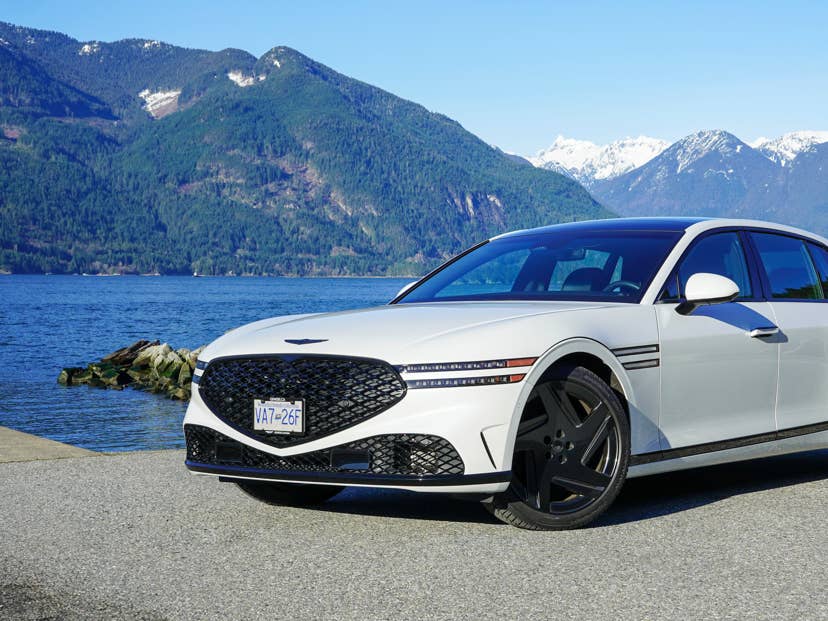
A week with the 2026 Genesis G90 Prestige Black
The 2026 Genesis G90 Prestige Black feels like the culmination of a decade-long experiment; one that, against all odds, succeeded. Genesis is no longer the ambitious upstart attempting to undercut German luxury sedans on price alone. With the current G90, especially in its fully bespeckled, long wheelbase, Prestige Black form, the brand has arrived at something far more compelling: a flagship that stands confidently on its own terms. After a full week behind the wheel and even a bit of time in the power-reclining, deep-tissue-massaging back seat, it became increasingly clear that the G90 isn’t trying to out-German the Germans. Instead, it sheds light on how formulaic the segment has become, offering an alternative that feels fresher, more deliberate, and, in many unique ways, more luxurious.
I should also make one thing clear upfront: my affection for the Genesis G90 doesn’t come from any sort of indifference toward German luxury flagships. In fact, it’s quite the opposite. I grew up idolizing cars like the Mercedes-Benz W140 and W221 S-Class, the BMW E32 and E38 7 Series, and the D3 Audi A8. Whether I was watching the 450SEL 6.9 or the Audi S8 tearing up French streets in Ronin, witnessing Jason Statham putting the D3 A8 W12’s Quattro all-wheel-drive system through its paces in the Transporter film franchise (in which he also piloted an E38 7-Series and a W140 S-Class), or ogling my uncle’s black-on-black BMW E32 in his Seattle garage as a kid, those large, luxurious barges on wheels have had their hooks in my heart for as long as I can remember. Those cars weren’t just expensive and exclusive; they were over-engineered statements of proud intent, built at a time when comfort, durability, and silent authority mattered more than huge screens, LED light shows, or aggressive design purely for the sake of social media engagement. They collectively set the standard by which I still judge every modern luxury sedan.
Cole Attisha
Dirty Car? Shop Chemical Guys Specials: Up To 40% Off
Disclaimer: If you buy something via one of our links, we may earn a commission.

Chemical Guys Basic Wash and Wax Kit: 28% Off
Get a high foam wash with Mr. Pink, then wax your ride the easy way with Butter Wet Wax.

Chemical Guys Exterior Starter Kit: 33% Off
Upgrade your wash routine with the Clean Exterior Starter Kit.


Chemical Guys Streak Free Glass Cleaner: Just $9.99
Ammonia-free formula is safe for all window tints.
Design that refuses to imitate the German playbook
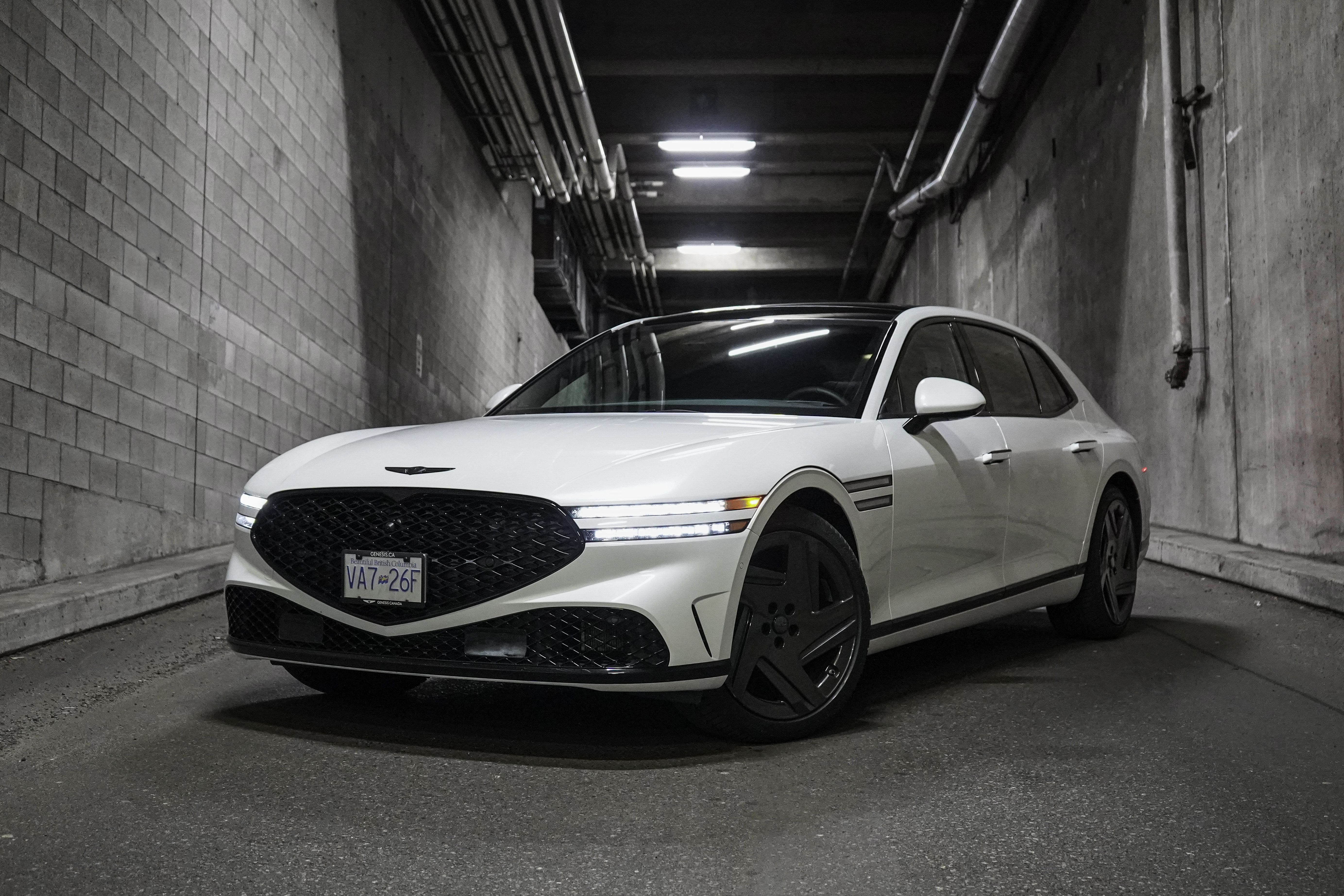
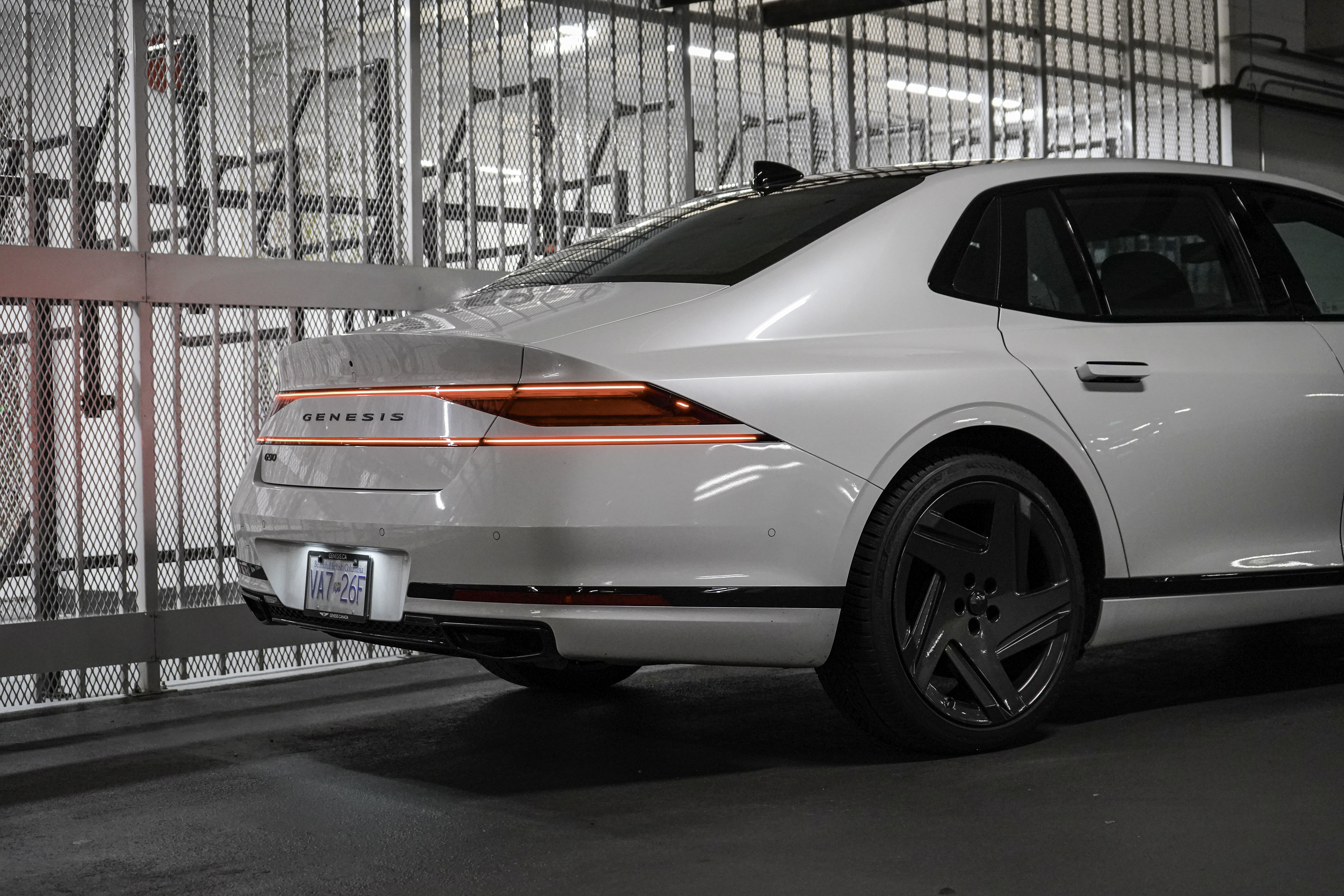
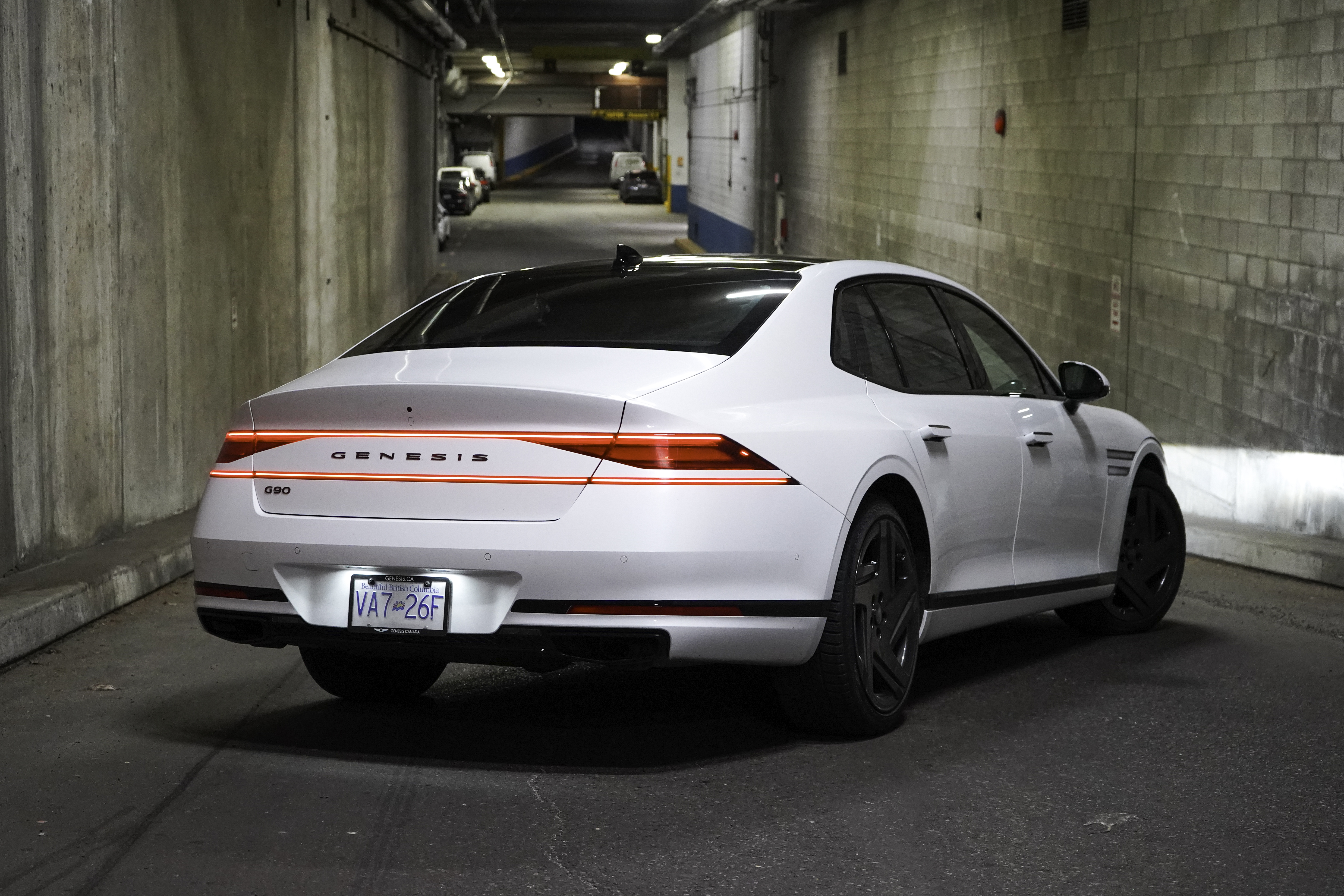
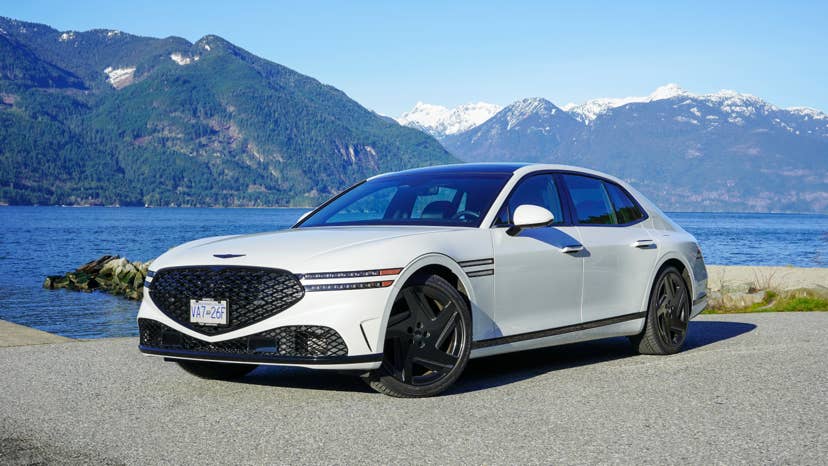
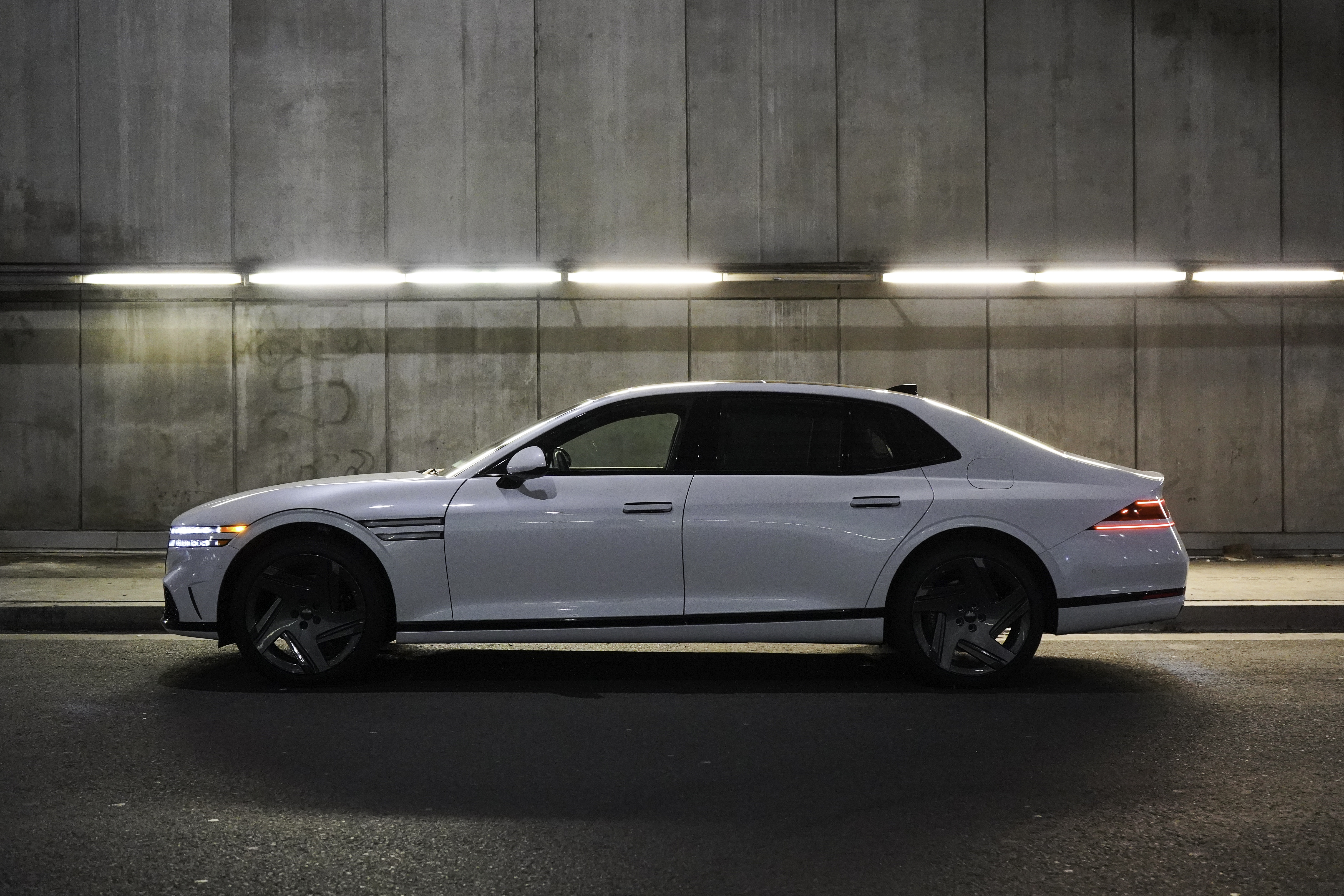
Luxury sedans from Germany tend to follow a familiar script: evolutionary lines, restrained proportions, and just enough aggression to signal trendiness without offending tradition. The Genesis G90 ignores that formula entirely, more so than ever before with its second generation (or third if you count the Hyundai Equus). In Prestige Black form, the G90 is inimitably unique. Its five-spoke mono-block-style wheels, stark surfacing with distinct edges, and signature twin-lens lighting give it a presence that’s instantly recognizable yet innocuous. Sure, you could say the BMW i7 is just as recognizable, but I’d submit to you that’s only because it blinds you with its gopping grille every time you’re forced to lay eyes on one. Some will call the G90 polarizing, but I still believe it has a sense of stateliness that the Mercedes S-Class, BMW i7, and Audi A8 have increasingly shifted away from in recent years.
What struck me most over the course of the week wasn’t just how distinctive it looked, but how intentional every line and every crease felt. This isn’t designed by committees or focus groups; it’s a luxury flagship penned by people willing to take risks. After all, it was drawn up by the one and only Luc Donckerwolke, who’s also credited with creating style icons such as the Lamborghini Murciélago (striking enough even for Batman), the Gallardo, and the Bentley Flying Spur. In a segment increasingly obsessed with not alienating existing buyers, the courage coming out of the Genesis design department is extremely refreshing.
Cole Attisha
How the G90 drives when comfort is the priority
The Genesis G90 doesn’t pretend to be a sports sedan, and that honesty works in its favour. Its 409-horsepower twin-turbocharged 3.5-litre V6, fitted with a 48v e-supercharger, delivers effortless, near-silent torque, while the multi-chamber adaptive air suspension and electronic four-wheel steering work together to make nearly 5,200 pounds feel improbably manageable. Is it lighter or sharper than an S-Class? No. And it doesn’t need to be. Where the G90 excels is in composure. It isolates occupants from the outside world with a softness and calm that modern German rivals seem increasingly reluctant to prioritize. Sport mode is there when you want it, but the G90’s true strength lies in its ability to make distance disappear without demanding your attention.
In that sense, the G90 reminded me less of a modern W223 S-Class and more of the great ones that came before it. The way it glides over broken pavement, evaporates noise, and never feels hurried, brought back memories of the W221 S-Class at its very best, or even the vault-like composure of a well-kept W140. There’s a sense that the car was engineered to outlast trends, not chase them; something that feels all too rare in today’s flagship segment.
Cole Attisha
The rear seat is the point, and Genesis knows it
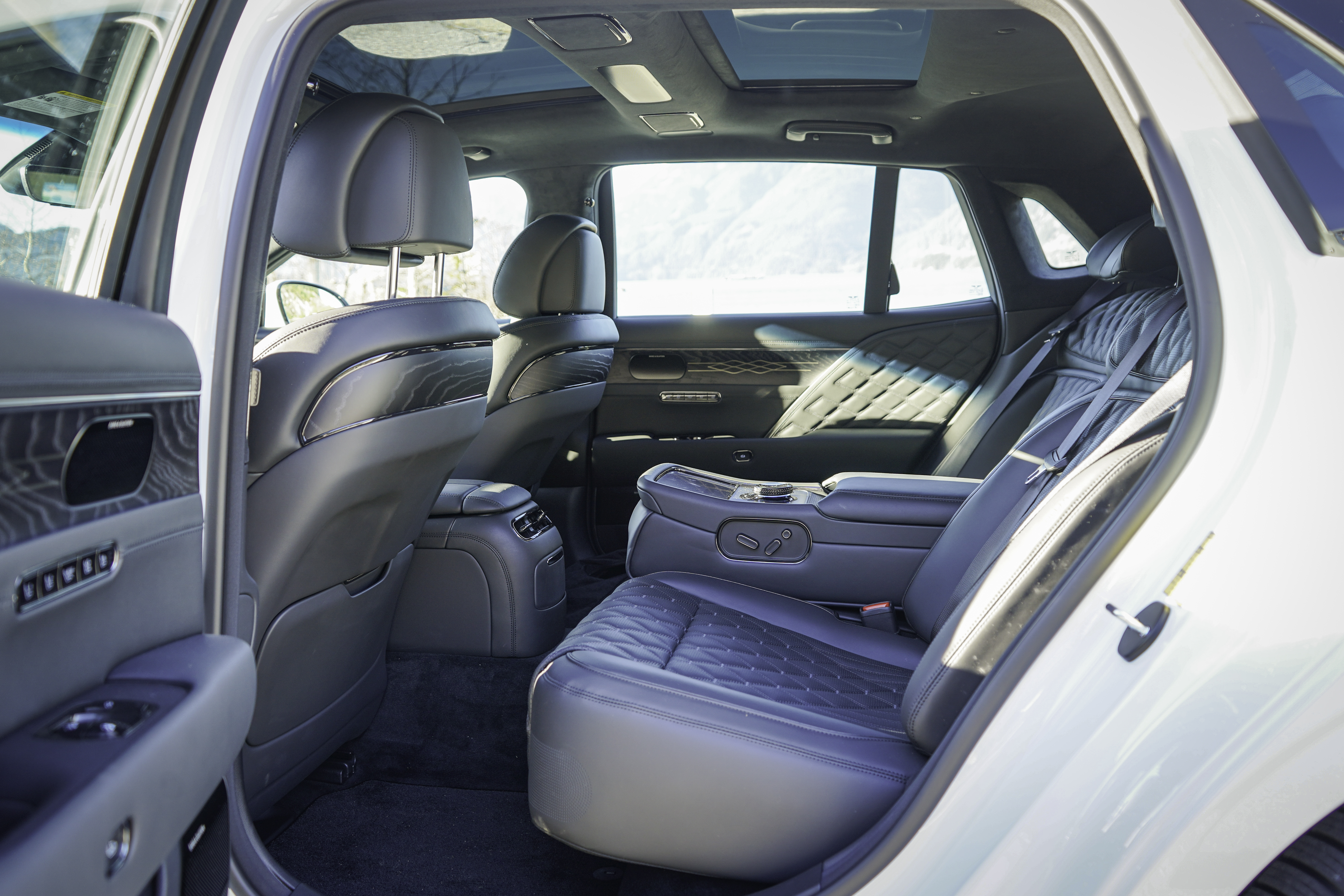
This is where the Genesis G90 pulls decisively ahead of its German rivals. The rear cabin isn’t treated as an afterthought or an optional indulgence; it’s the centrepiece. Power-reclining seats, deeply effective massage functions, immaculate materials, and a near-total absence of road noise make riding in the back of the G90 feel genuinely special. Having spent time in the rear seats of an Audi A8 and Mercedes S-Class, I can say this confidently: the G90’s rear-seat experience feels more generous, more thoughtful, and more relaxing. Genesis understands that true flagship luxury isn’t about impressing the driver. It’s about caring for the passenger.
The rear cabin experience also recalls an era when flagship sedans were unapologetically built around passenger comfort. Cars like the E38 7 Series and D3 Audi A8 weren’t obsessed with digital theatrics; they focused on space, seating geometry, material quality, and serenity. The Genesis G90 feels like a modern reinterpretation of that philosophy, one in which technology exists to enhance comfort rather than compete for attention.
Cole Attisha
Technology that serves the experience, not the spec sheet
The G90 is packed with technology, but it never feels like it’s trying to show off. Features like Highway Driving Assist II, Remote Smart Parking, and comprehensive driver-assistance systems operate quietly in the background, enhancing confidence rather than demanding interaction. Inside, the tech feels purposeful. The UV-C sanitization compartment is a clever touch, even though it feels a bit gimmicky. The Bang & Olufsen 3D audio system is exceptional, especially with its Virtual Venue Live settings, which can simulate the acoustic profile of iconic venues such as Boston Symphony Hall or Wembley Stadium. Even the noise-cancellation system works invisibly, contributing to the G90’s serene atmosphere. Compared to the sometimes over-designed interfaces found in newer German flagships, Genesis’s approach feels refreshingly human-centric.
That restraint is something I associate far more with classic German flagships than with their current descendants. The best versions of the S-Class, 7 Series, and A8 were never about overwhelming the senses; they were about making long journeys feel effortless. They were cars that you actually wanted to spend time commuting in. In that respect, the G90 feels spiritually aligned with the W221 or E38 era, while today’s German alternatives often seem more preoccupied with on-trend novelty than with timelessness.
Cole Attisha
Why the G90 makes more sense than an S-Class or 7 Series
At just over $105,000, the fully-loaded Genesis G90 Prestige Black undercuts a sparsely equipped Mercedes-Benz S-Class by a significant margin, and that gap only widens once options are factored in. More importantly, the Genesis doesn’t feel like a compromise. Performance is comparable. Comfort arguably exceeds expectations. Build quality and materials stand shoulder to shoulder with the segment’s best. What the G90 lacks in brand heritage, it makes up for in clarity of purpose and in the genuine passion that seems to go into every minute detail. Choosing the Genesis isn’t about settling; it’s about rejecting convention in favour of something more considered.
Cole Attisha
Final thoughts: The luxury flagship I’d actually spend my money on
The Mercedes-Benz S-Class remains a monument to tradition. The BMW 7 Series leans heavily on technology and spectacle. The Genesis G90 Prestige Black, however, feels like the most complete luxury sedan of them all, because it understands restraint, comfort, and emotional design in equal measure. After a week with it, I wouldn’t choose the G90 despite the German competition; I’d choose it because of them.
Perhaps that’s why the Genesis G90 Prestige Black resonates with me so deeply: It doesn’t remind me of what German luxury sedans are today. Instead, it reminds me of what they used to be. It reminds me why I fell in love with these cars so long ago. In many ways, it feels like the modern successor to the values embodied by the W140, W221, E38, and D3 A8: cars designed to be exceptional first and fashionable second. And if that makes the G90 the most compelling luxury flagship on sale right now, it says as much about the state of the segment as it does about Genesis’s remarkable rise.
If you’d like to read a more in-depth review of the 2026 Genesis G90 Prestige Black by yours truly, visit Road Ethos, an up-and-coming automotive publication dedicated to automotive lifestyle, design, and news, brought to you by real, human journalists from a place of passion and grounded industry insight.
About the author

Cole Attisha
Staff Writer, Autoblog