
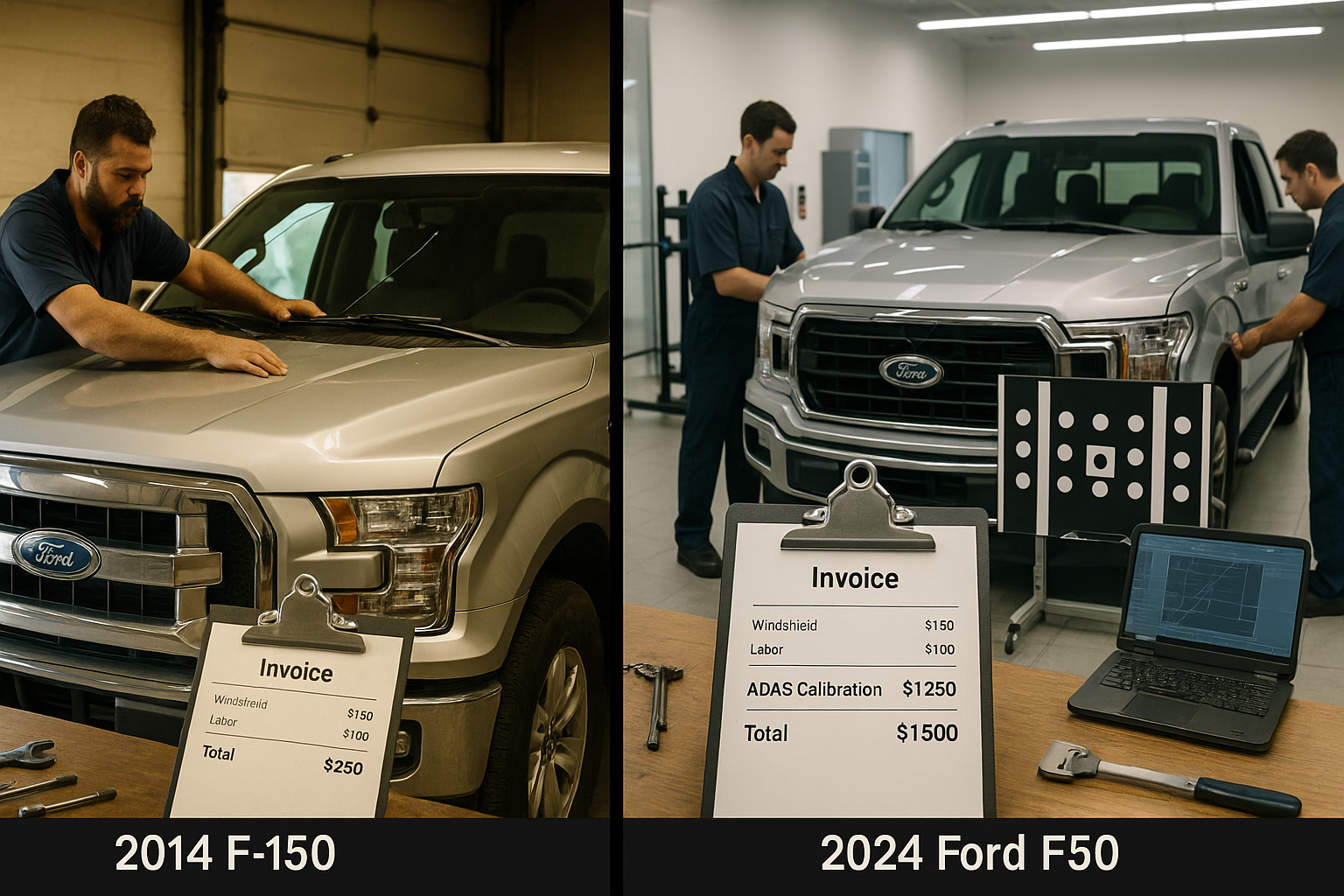
Insurance feels fair until you’re paying for tech your car doesn’t even have. Advanced Driver-Assistance Systems (ADAS)—the cameras, radars, and sensors that power lane-keep, auto-brake, and blind-spot alerts—turn minor dings into major repair tickets. Even if you drive a 2014 pickup with none of that hardware, pooled risk means your premium helps cover those calibration line items. That’s why the average U.S. full-coverage policy is now cresting two grand a year, and why your renewal hurts even when you never file a claim.
When Safety Tech Drives Up Repair Costs
ADAS cuts some crashes. It also makes repairs slower and more technical. Modern estimates show shops scanning almost every late-model vehicle and adding calibrations to a fast-growing share of repairs. Each extra step adds labor time, specialized equipment, and scheduling delays. That’s how frequency can fall while claim severity keeps pressure on premiums.

Why a Fender Bender Now Costs $1,000 More
Swap a windshield on a 2021 crossover and you’re not done when the glass sets. The forward camera needs calibration on a level surface with targets and OEM procedures. Typical calibration charges sit in the mid-hundreds, and complex jobs go higher. Front-end scrapes that once meant plastic and paint now drag in radar modules and alignment routines. On recent models, ADAS components alone can add well over a grand to otherwise modest repairs.
Why Your 2014 Pickup Pays for 2024 Tech
Insurers price the whole book, not just your beater. When a 2024 compact taps a parking post and triggers camera and radar calibrations, the average claim cost rises. Multiply that across a newer fleet and severity lifts baseline pricing for everyone. That’s why the owner of a sensor-free truck still sees a double-digit jump: the tech tax lives inside the average.
How to Shop Smarter for Insurance
If you’re buying, get quotes by VIN and ask a trusted shop what common ADAS repairs cost on your short list. If you’re keeping your current ride, shop carriers anyway—some underwrite severity trends differently and reward lower-tech repairs with better rates. Either way, understanding ADAS repair costs is the only way to play the game the underwriters are playing.
About the author

Brian Iselin
Senior Editor, Autoblog