
Scaling back electric vehicle investments amid the EV sales slump does not come cheap for automakers. That’s actually putting it mildly as companies are in fact taking a massive financial burden, having been forced to reduce, delay or cancel many EV projects.
As the auto industry pivots from earlier EV growth plans to slowing demand in key markets and unfavorable political climate, global automakers have recorded billions of dollars in losses—a total or around $55 billion, according to Reuters.
Stellantis Leads The Pack With $26.2 Billion Write-Down

Stellantis is the latest automaker to announce how much over-estimating the pace of the energy transition has cost it, disclosing $26.2 billion in write-downs during the second half of 2025. The announcement vaporized more than 20% of the value of Stellantis shares, with the stock reaching its lowest level in six years.
Stellantis CEO Antonio Filosa blamed shifting consumer demand, evolving emissions rules in the U.S. and a need to reorganize the company’s portfolio as key factors behind the massive write-down.
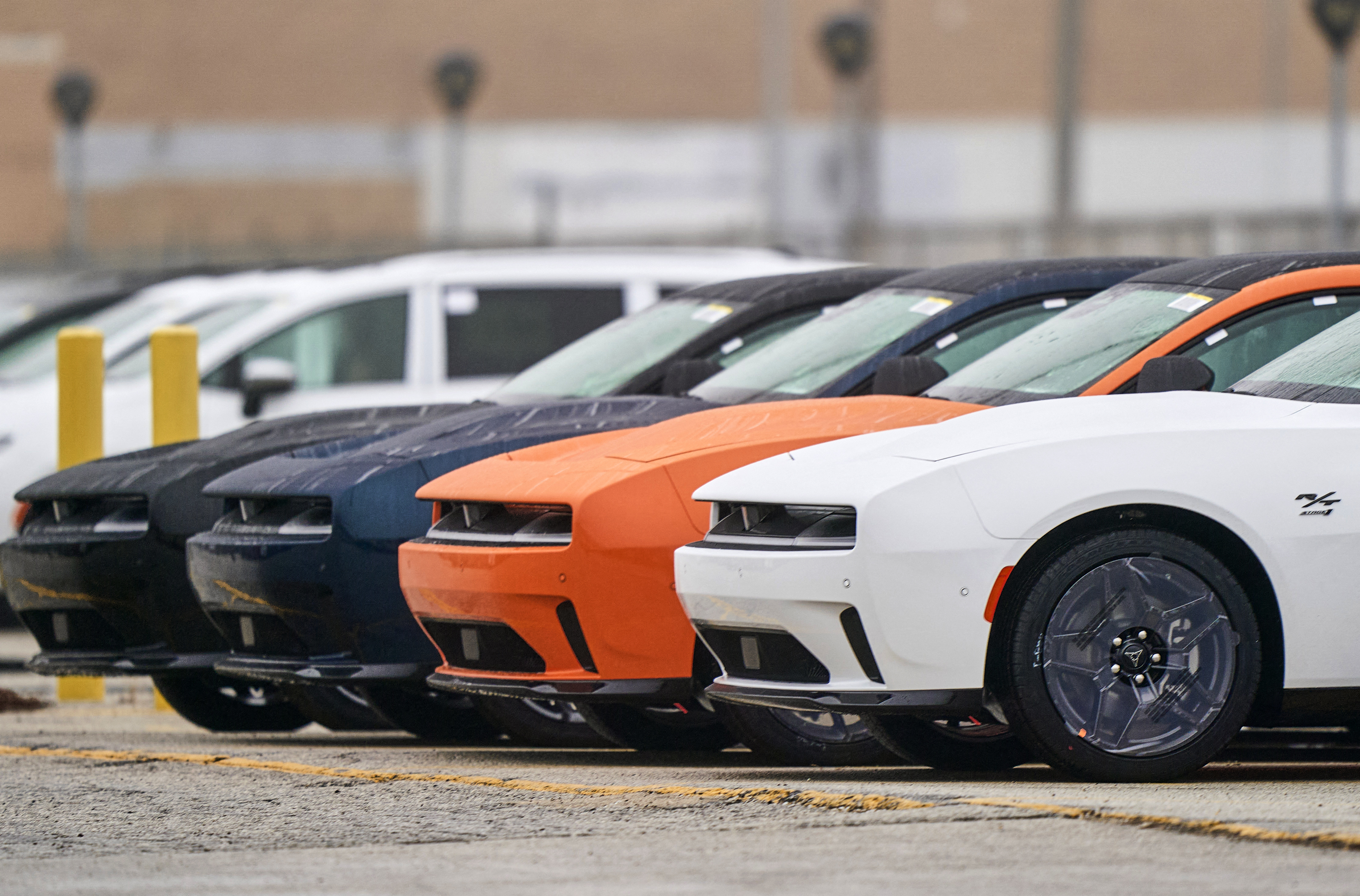
The automaker is significantly pulling back on its electrification strategy in North America, canceling the Ram 1500 REV all-electric pickup and entry-level Dodge Charger Daytona R/T EV, shelving the Dodge Charger Daytona SRT Banshee electric muscle car, and dropping all plug-in hybrid Jeep and Chrysler models for the 2026 model year.
Ford Is A Close Second With $19.5 Billion

But the Franco-Italian carmaker is not the only one to make such an announcement. Ford said in December that it would take a $19.5 billion write-down tied to its EV operations, the cancellation of several electric models (most notably the F-150 Lightning) and fresh investments in gas and hybrid vehicles.
In January, a similar announcement came from General Motors, which revealed a $6 billion charge in relation to a reduction in EV investments. The automaker said that included $4.2 billion in cash costs stemming from contract cancellations and settlements with suppliers. The General had already taken a $1.6 billion EV write-down in the third quarter.
Europe’s largest automaker, Volkswagen Group, also revealed a $6 billion hit in September because of a far-reaching product overhaul at its Porsche subsidiary. The luxury brand had to delay and even cancel some EV models in favor of hybrids and combustion engine cars. The sum included an impairment charge of around $3.5 billion.
How Did It Come To This?

There are many factors that have led to this situation, with the most important being the discontinuation of the EV federal tax credit at the end of Q3 2025, the Trump administration’s rollback of Biden-era fuel economy standards in December 2025, and a big disconnect between automakers’ projections of EV adoption and the reality in showrooms. At an international level, another big factor was the European Union’s cancellation of its 2035 EV mandate in December 2025.
On top of all these problems, legacy carmakers are also struggling to keep up with newcomers, mainly from China. In Europe, for example, the combined market share of Chinese automakers rose to 6.1% in 2025, nearly doubling from 3.1% in 2024, according to Automotive News Europe. In December 2025, their market share almost hit 10%.
In Mexico, Chinese-made vehicles reached almost 20% of total new vehicle sales last year, according to Mexico News Daily, making China the top supplier for the Mexican automotive market.
About the author

Dan Mihalascu
News Editor