
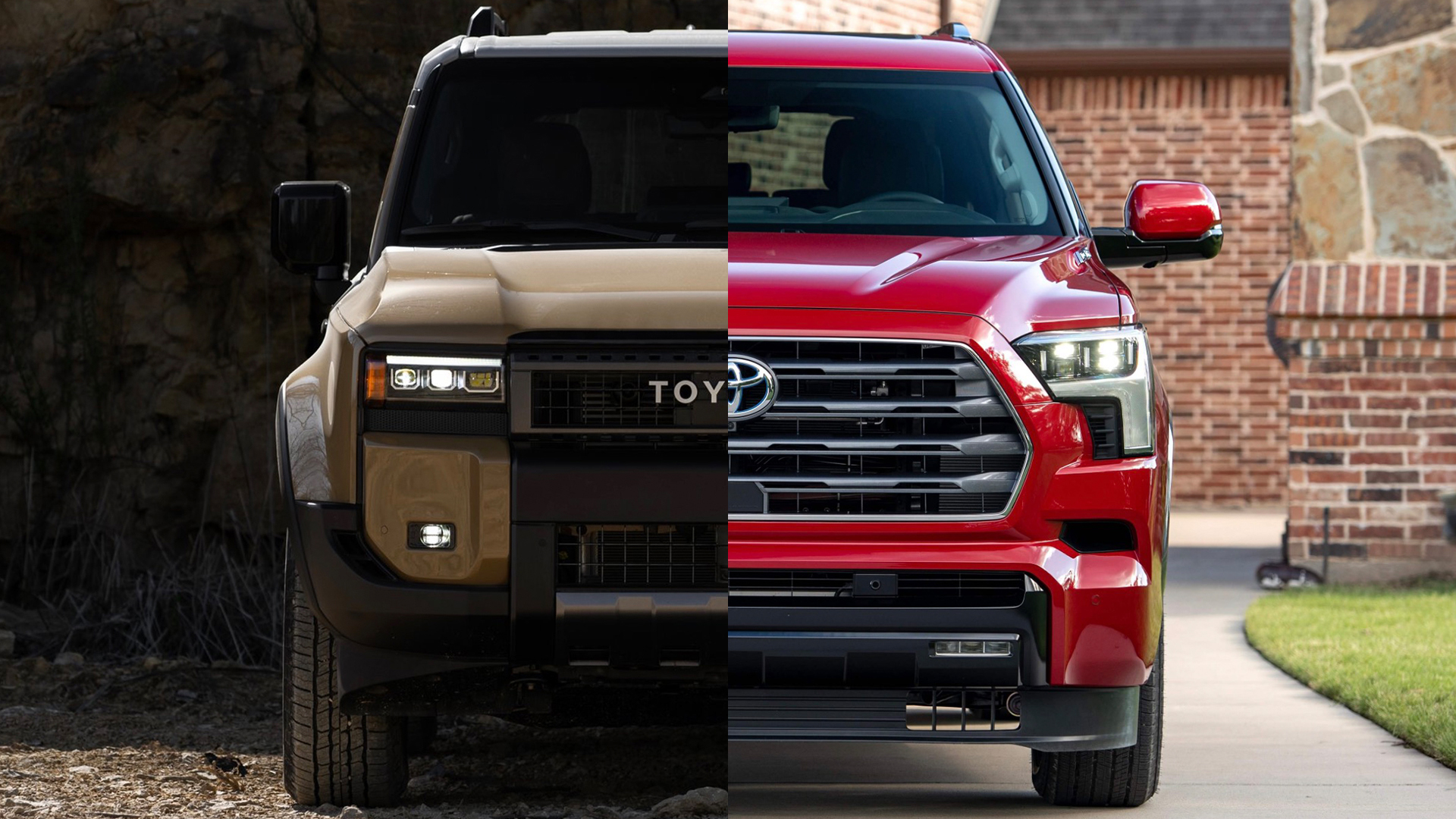
Toyota’s rugged SUVs duke it out
For most people in the U.S., the Toyota RAV4 is the perfect Japanese SUV, which is why it sells in such massive numbers. But if you need more space, capability, and power, you’re going to need something higher up in Toyota’s range of SUVs. That’s where the Sequoia and Land Cruiser come in. Unlike the RAV4, these are both true SUVs with body-on-frame structures, but they are quite distinct from one another, too. Here are five key differences between the Sequoia and Land Cruiser.
1. Land Cruiser Is Now Smaller
Toyota
Toyota
Toyota
Toyota
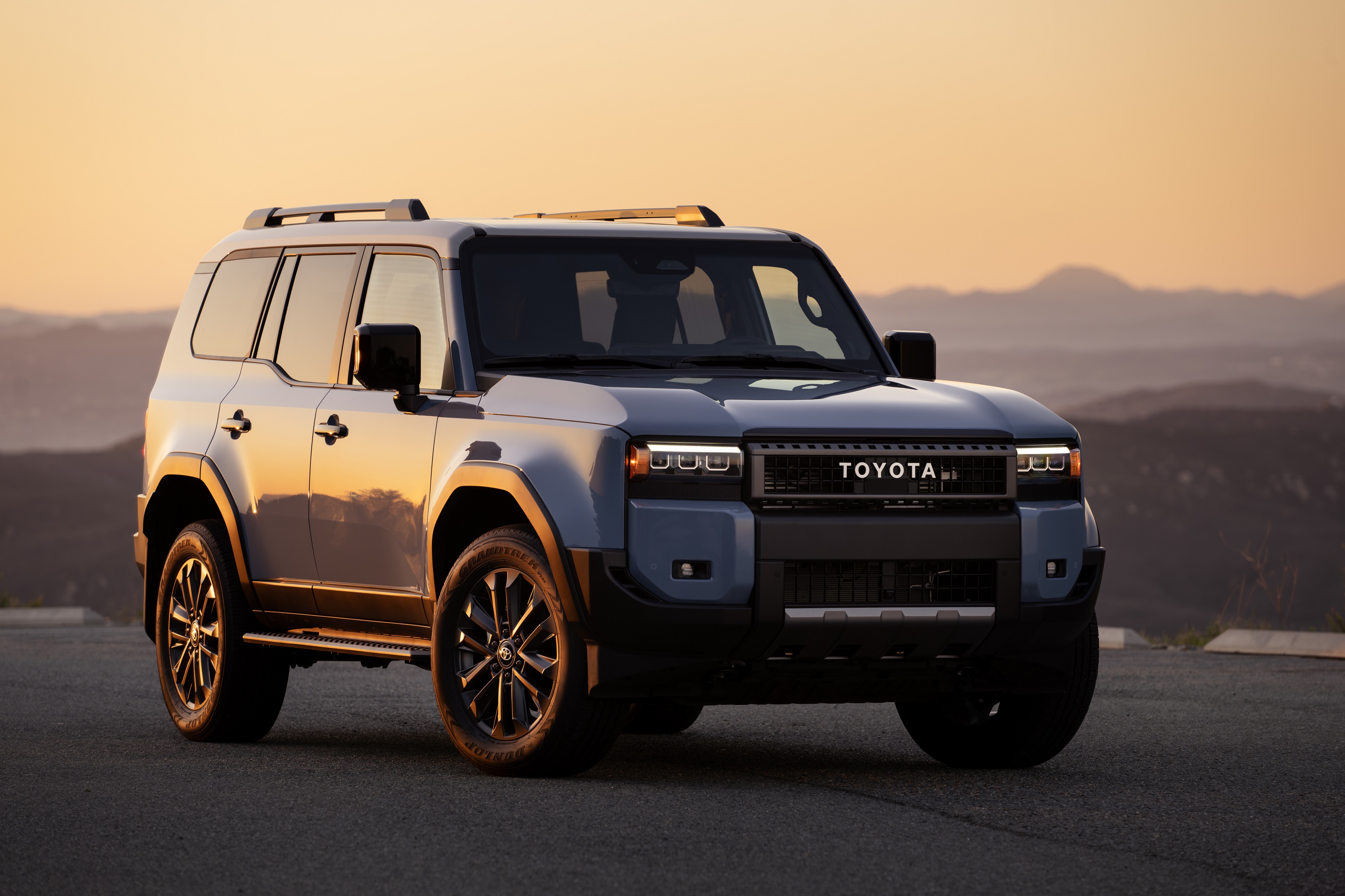
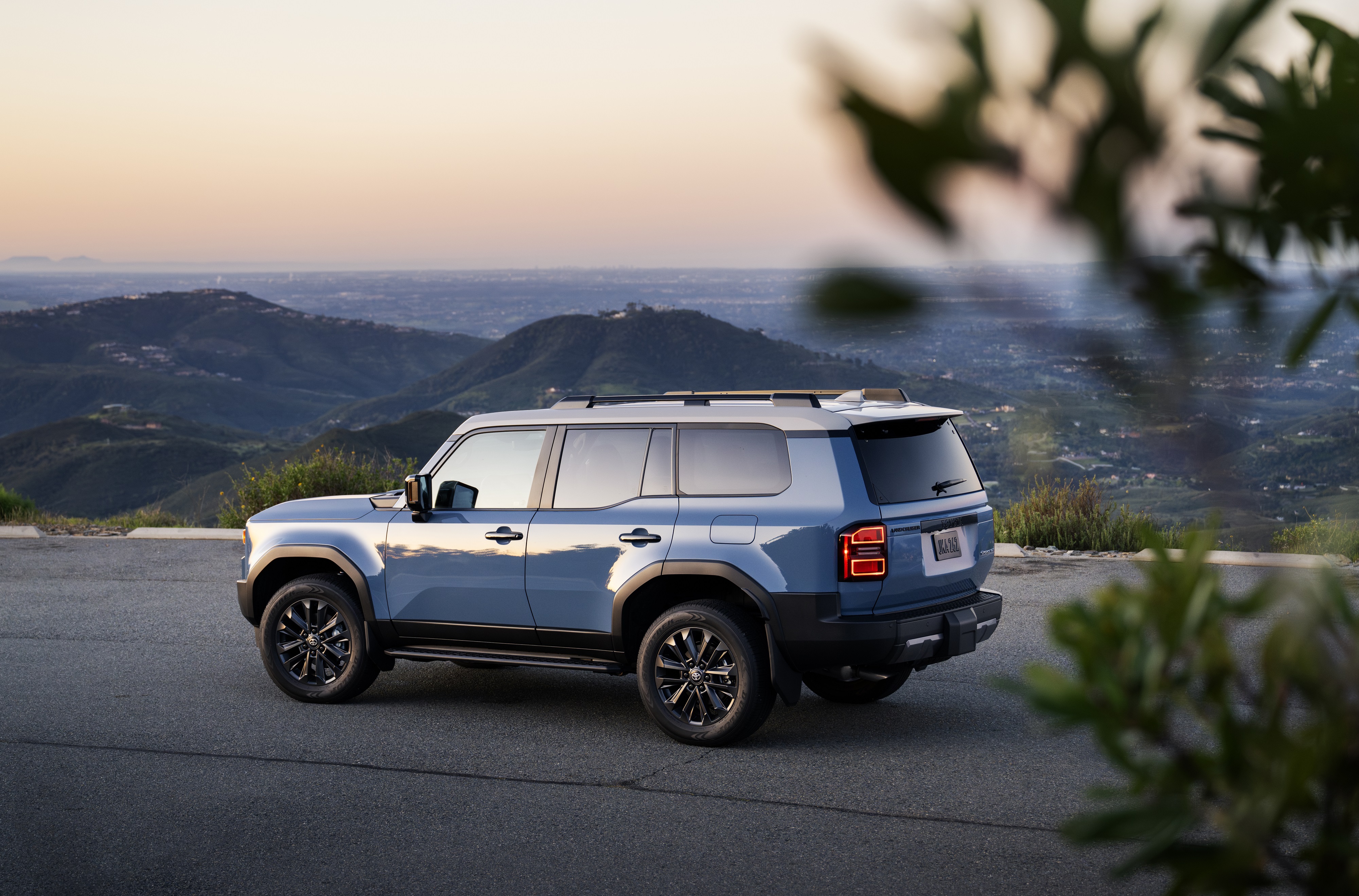
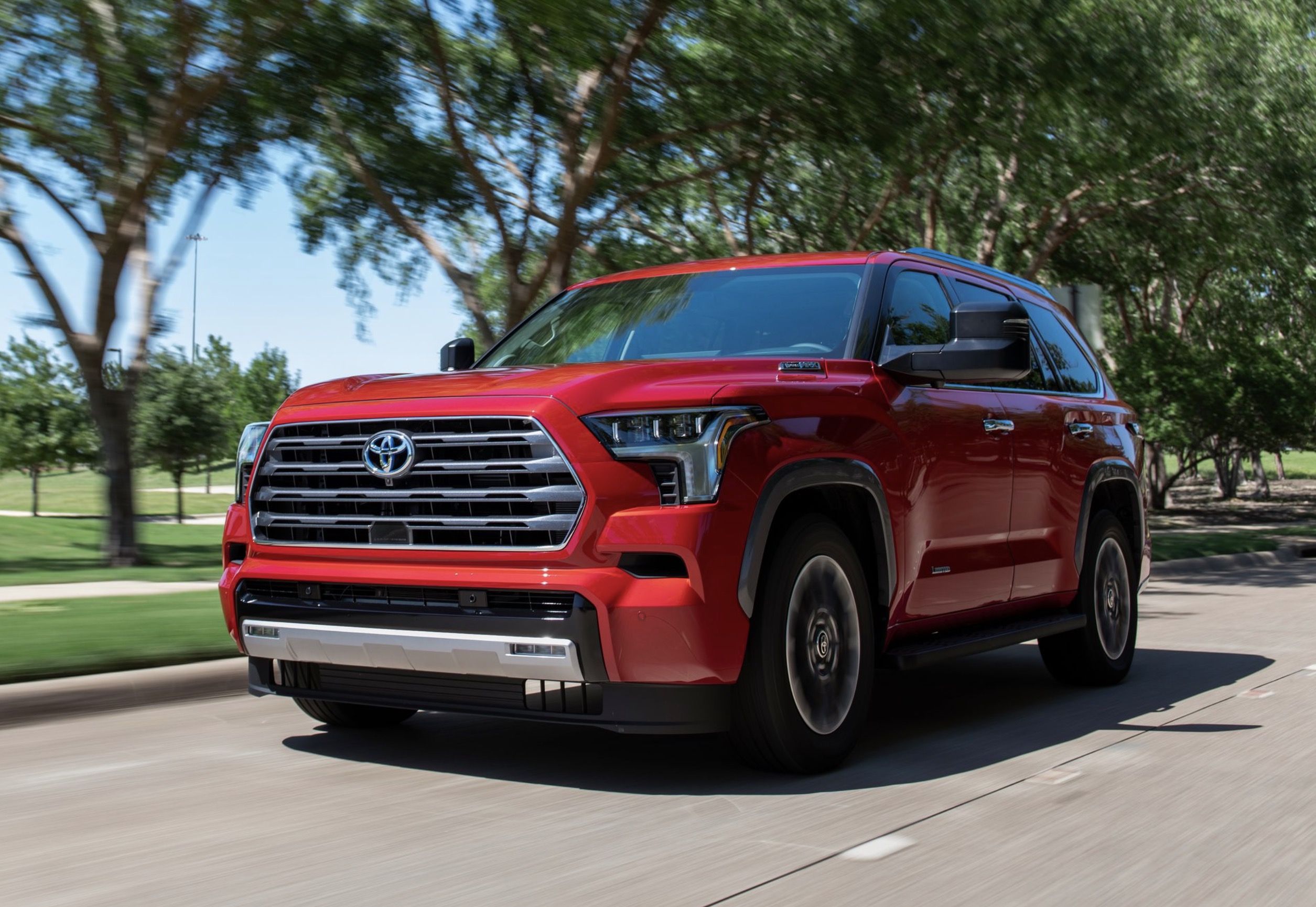
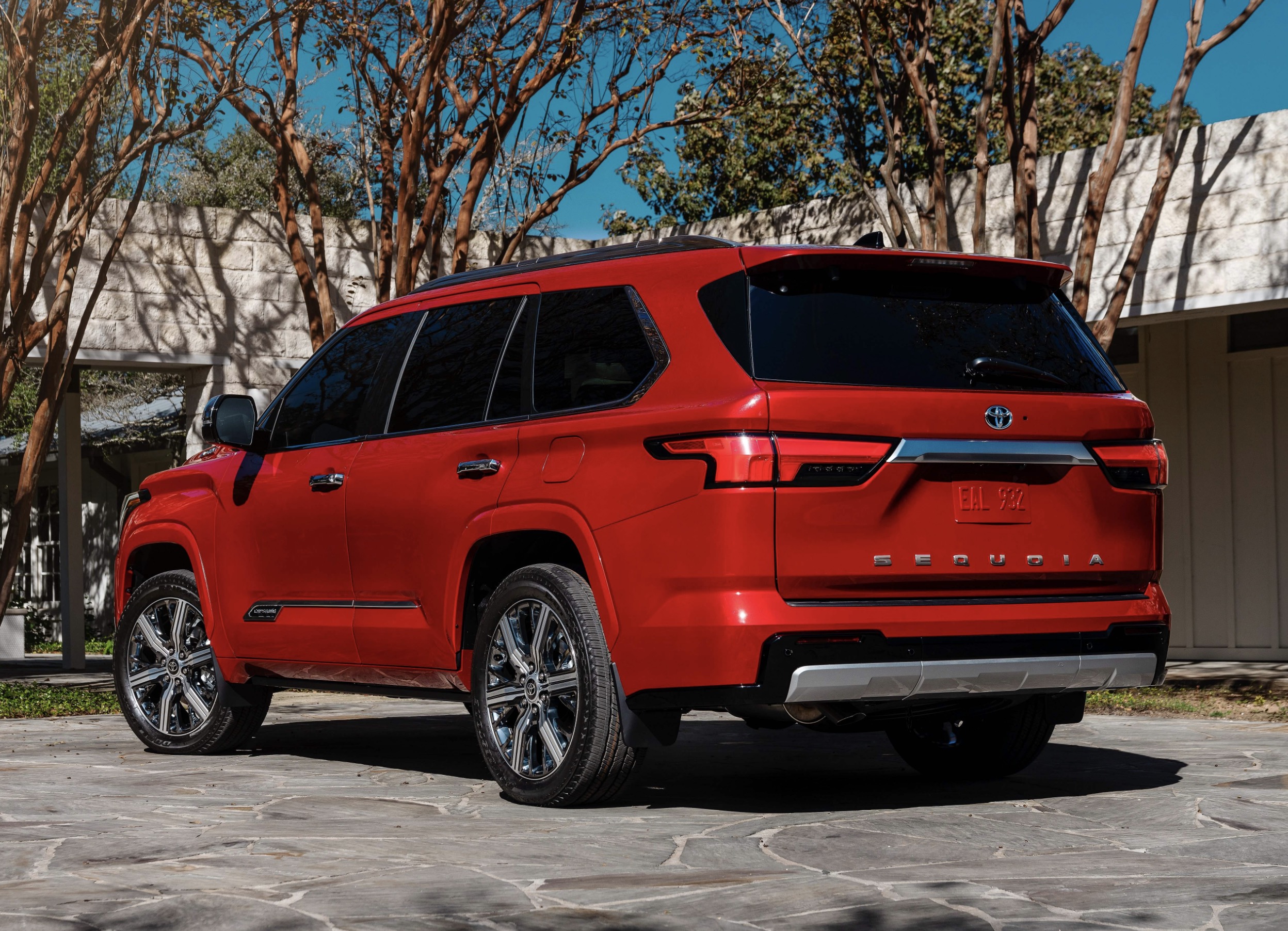
The previous Toyota Land Cruiser to be sold here was the brand’s largest SUV, but the new one has been downscaled to a mid-size model. It’s now significantly smaller than the Sequoia, as seen in the table below.
| Toyota Land Cruiser Vs. Toyota Sequoia Size Specs | ||
| Land Cruiser | Sequoia | |
| Length | 193.8 inches | 208.1 inches |
| Width | 77.9 inches | 79.6 inches |
| Wheelbase | 112.2 inches | 122 inches |
| Height | 76.1 inches | 77.7 inches (maximum) |
| Base curb weight | 5,037 lbs | 5,620 lbs |
While width and height are similar, the Sequoia is quite a bit longer than the Land Cruiser, freeing up more interior space. The Land Cruiser’s size makes it more suitable for navigating congested cities or tighter trails, though.
2. Sequoia Seats More People
Toyota
Toyota
Toyota
Toyota
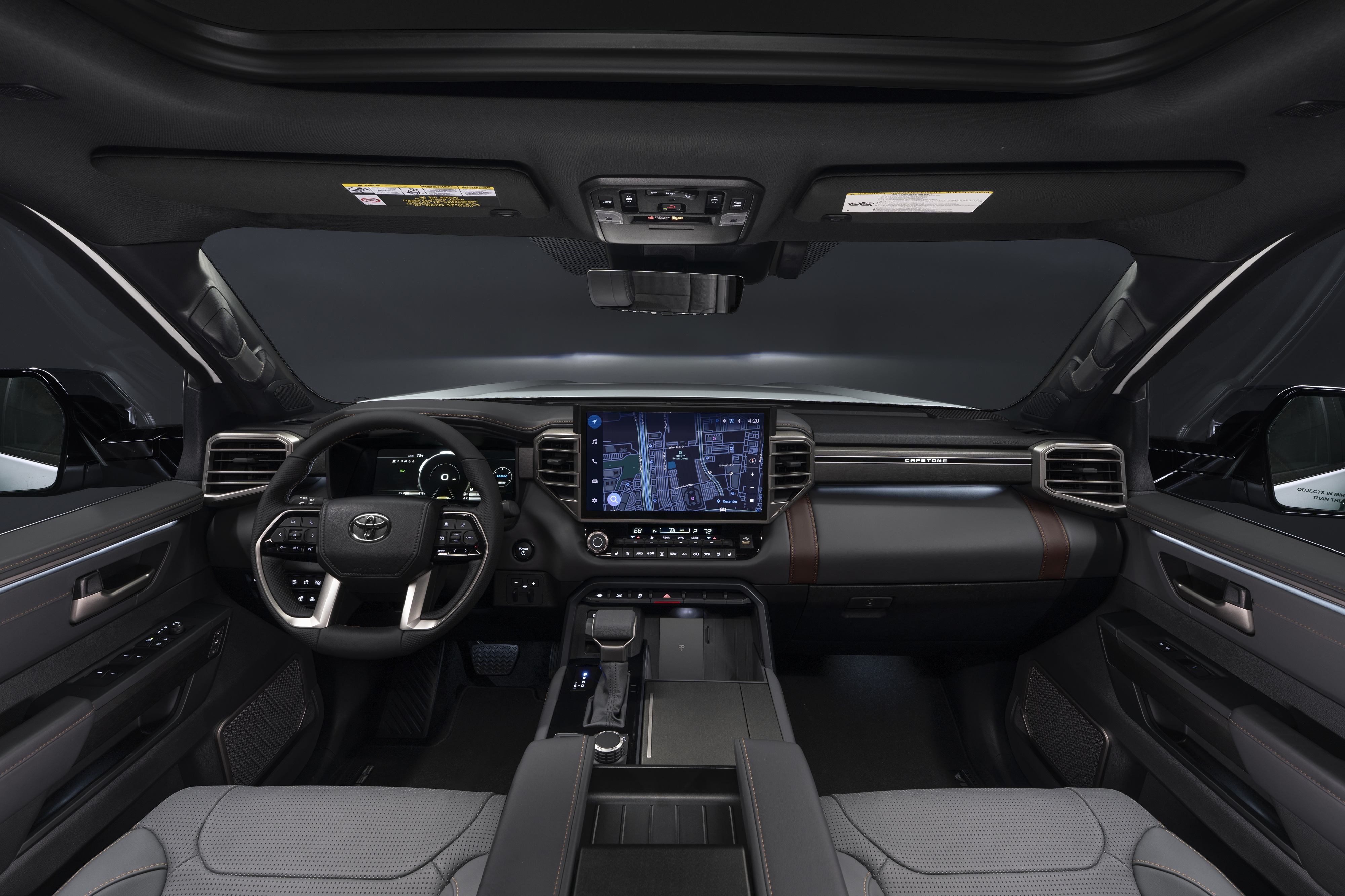
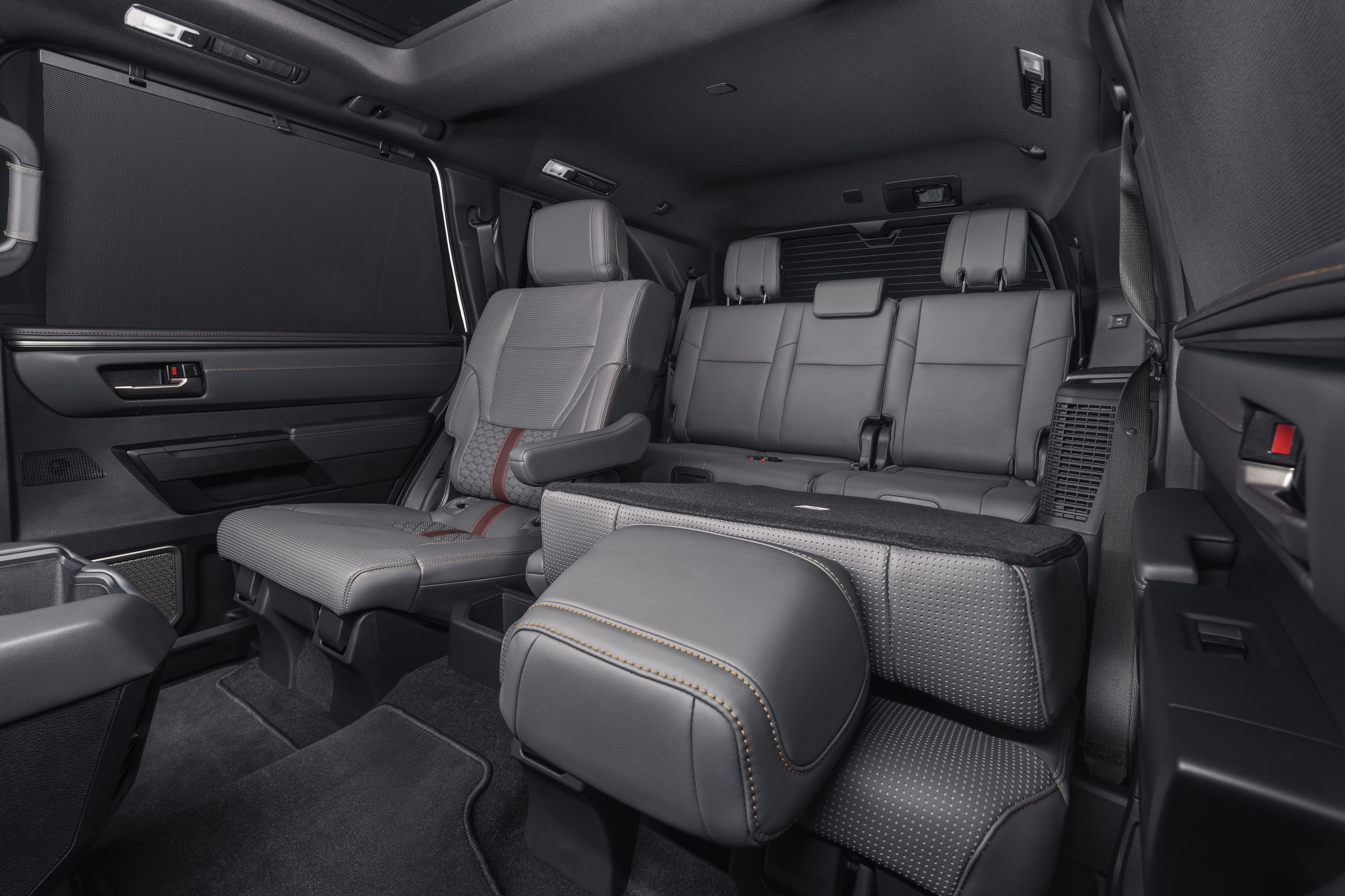
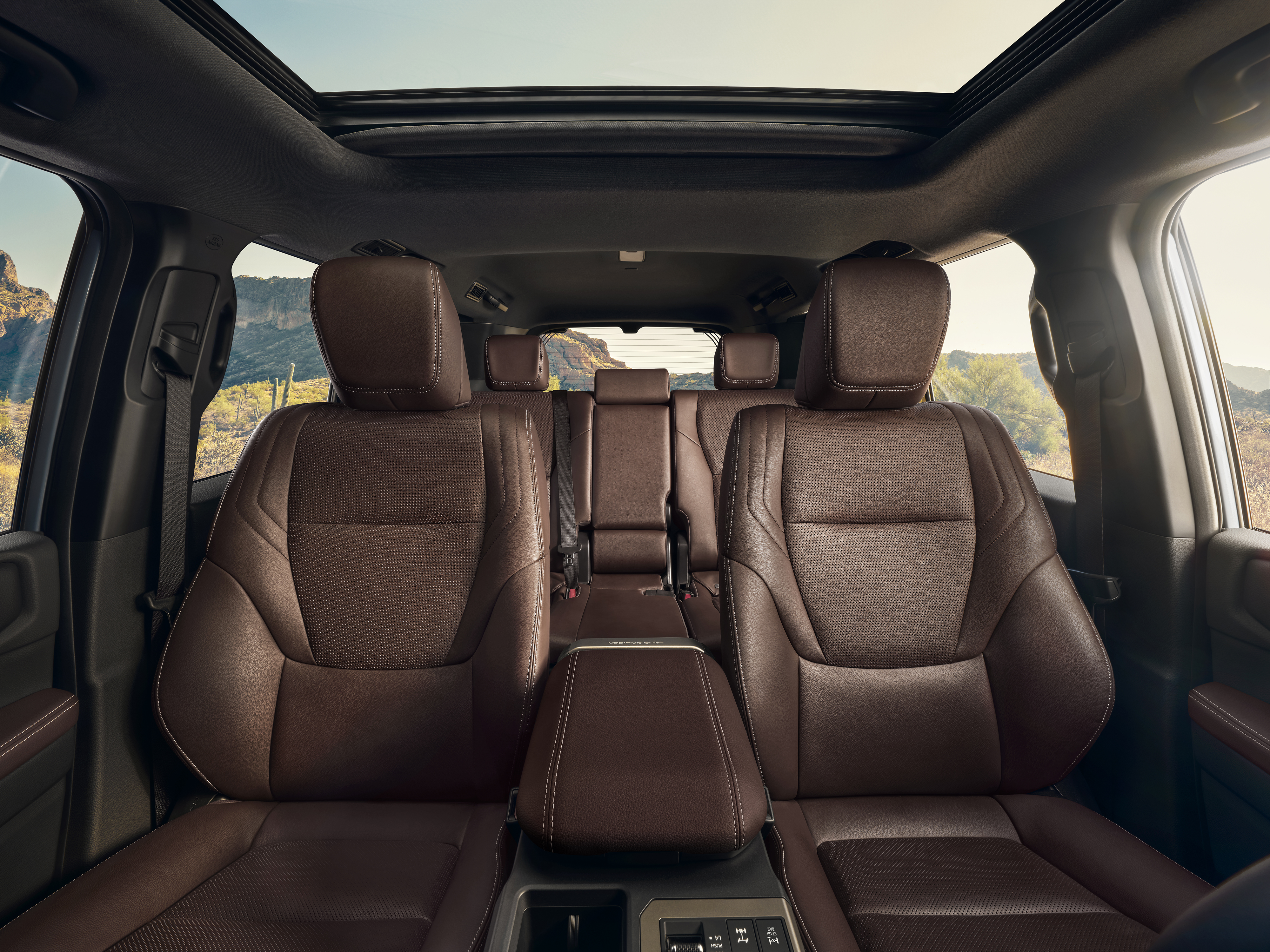
The longer wheelbase and body of the Sequoia enables three seating rows for up to eight people, whereas the current Land Cruiser is limited to a two-row layout for five people. However, the Sequoia doesn’t have a particularly spacious third row, so it’s more suitable for children than adults.
In the second row, the Sequoia can more comfortably accommodate three passengers, as the body is wider and it has more legroom than the Land Cruiser. However, the Land Cruiser isn’t too far behind on cargo space. It has 46.2/82.2 cubic feet behind the second/third rows, while the Sequoia’s figures are 49/86.9.
3. Toyota Land Cruiser Vs. Sequoia: Four or Six Cylinders?
Toyota
Toyota
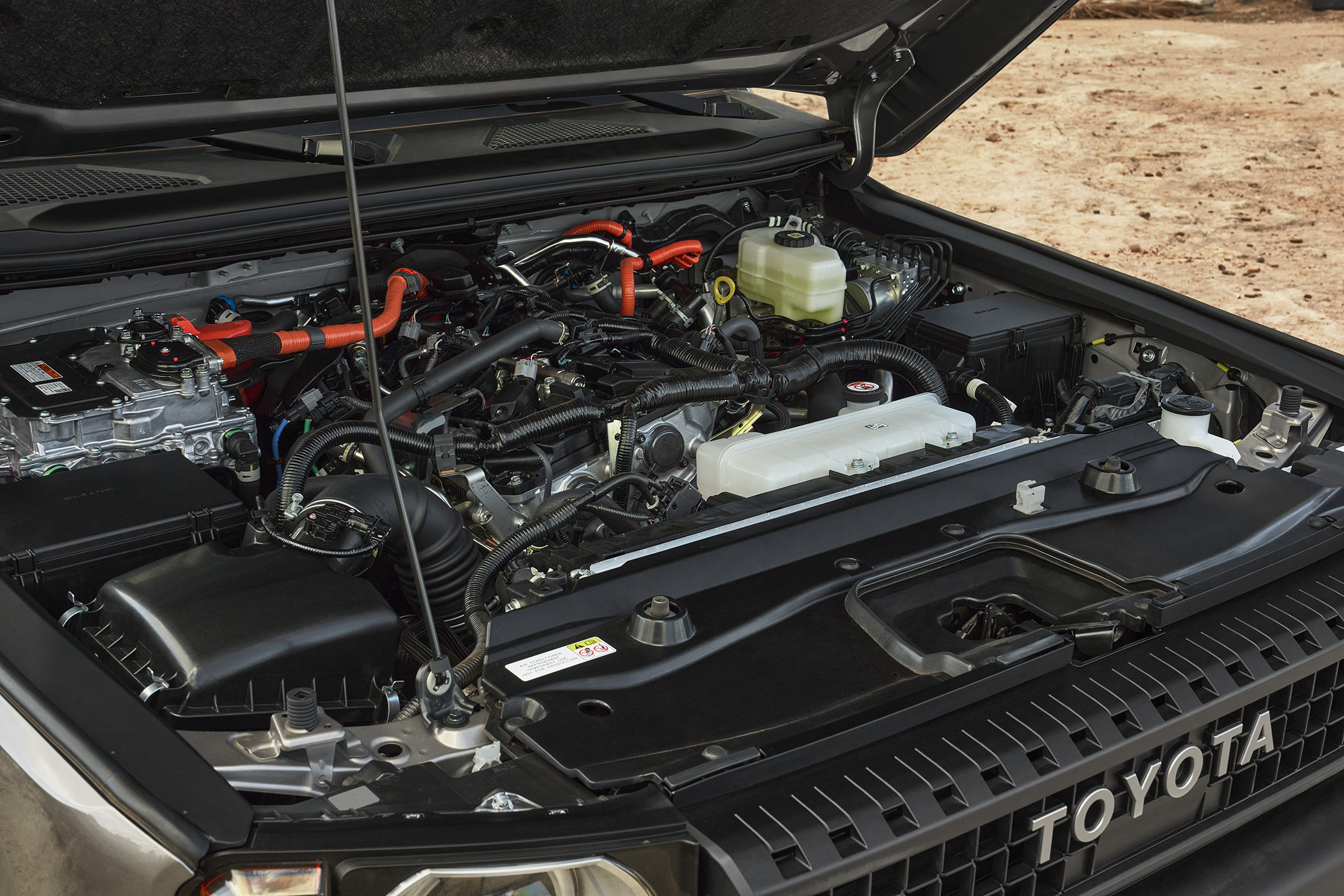
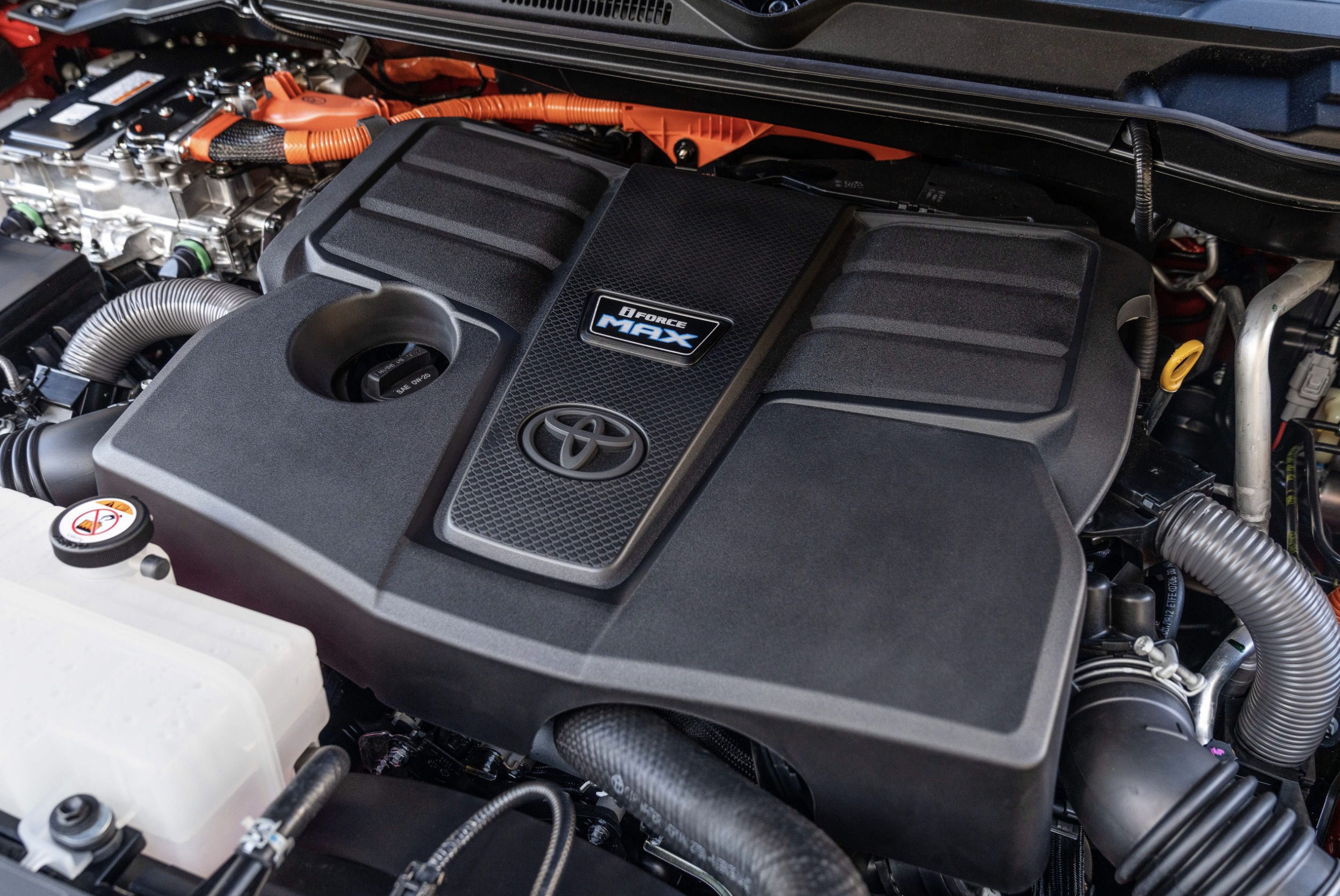
Both SUVs are hybrids, demonstrating the high level of electrification now seen across Toyota’s lineup. But, to cope with the Sequoia’s larger size and heavier body, it has a larger 3.4-liter twin-turbocharged V6. The Land Cruiser gets a smaller 2.4-liter four-cylinder, also boosted by turbocharging.
Here’s how their outputs and performance compare.
| Sequoia | Land Cruiser | |
| Engine | 3.4L V6 Twin-Turbo Hybrid | 2.4L I4 Turbo Hybrid |
| Horsepower | 437 hp | 326 hp |
| Torque | 583 lb-ft | 465 lb-ft |
| Transmission | 10-speed automatic | 8-speed automatic |
| Gas Mileage (city/highway/combined) | 19/22/20 mpg (4×4) | 22/25/23 mpg (4×4) |
| Towing capacity | 9,310 lbs | 6,000 lbs |
While the Land Cruiser needs around 7.7 seconds to reach 60 mph, the Sequoia is genuinely rapid, hitting the same mark around two seconds earlier. The Sequoia can also tow over 3,300 lbs more, but the Land Cruiser is more economical.
4. Land Cruiser Wins For Off-Roading
Toyota
Toyota
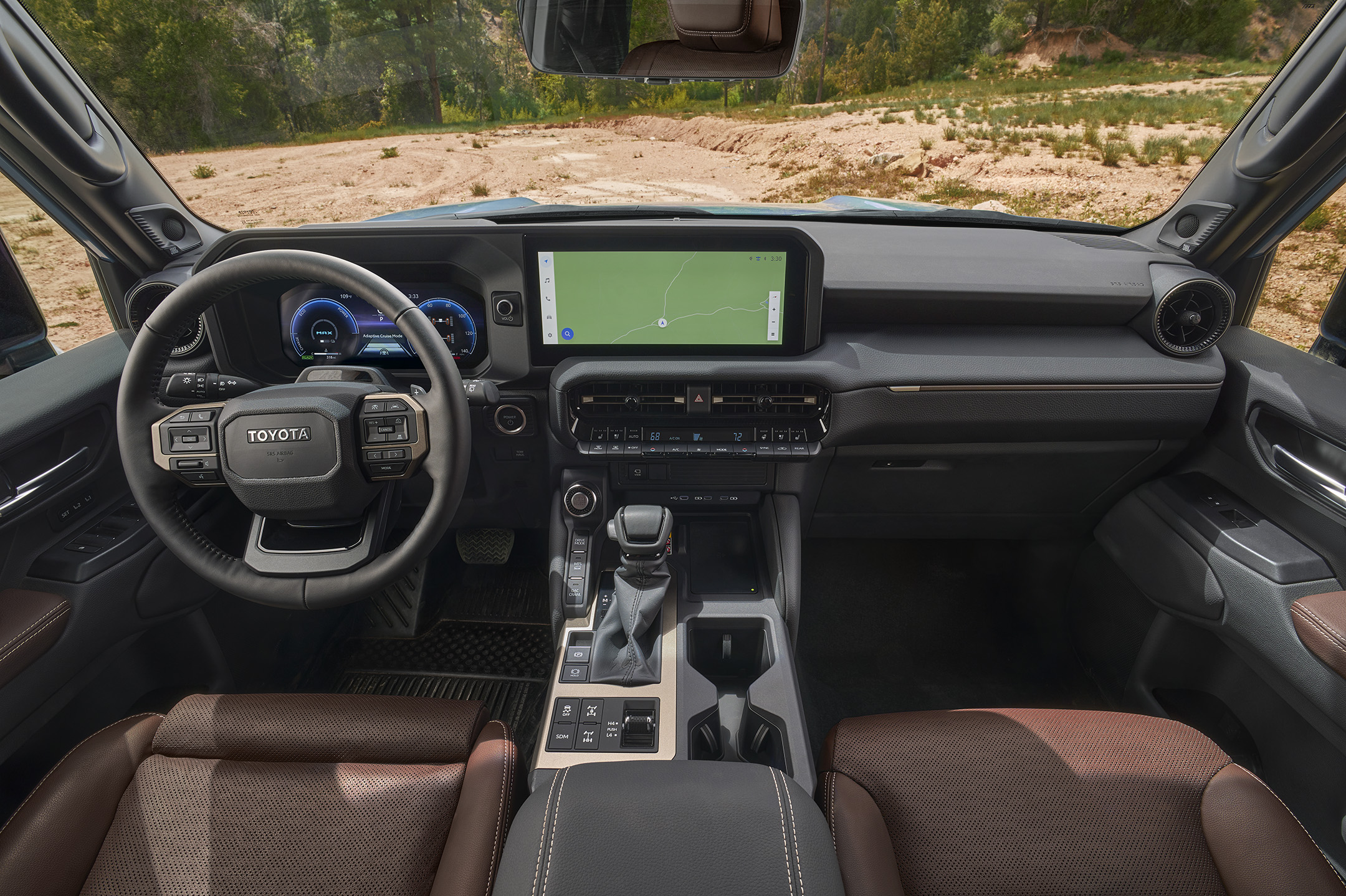
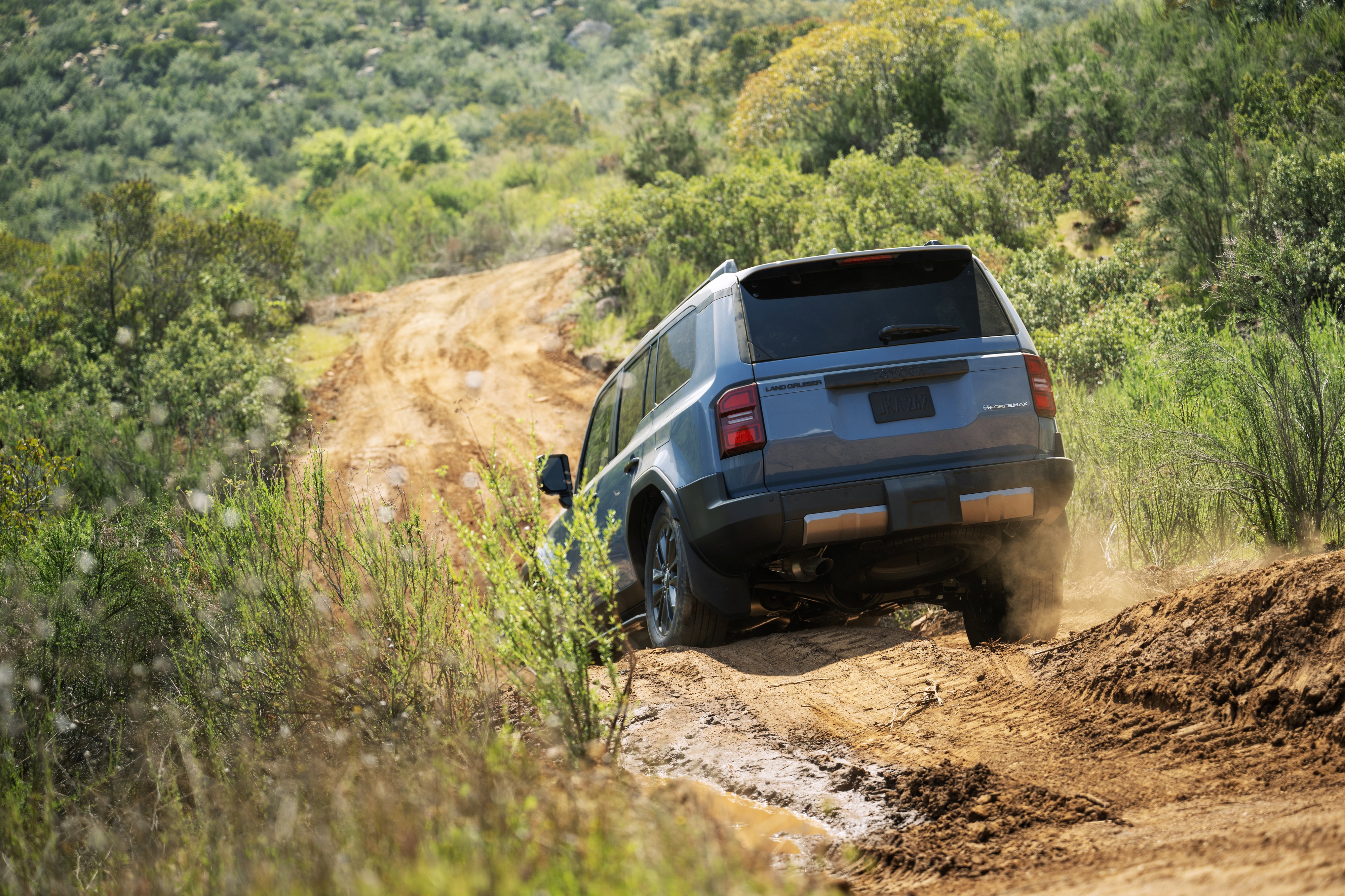
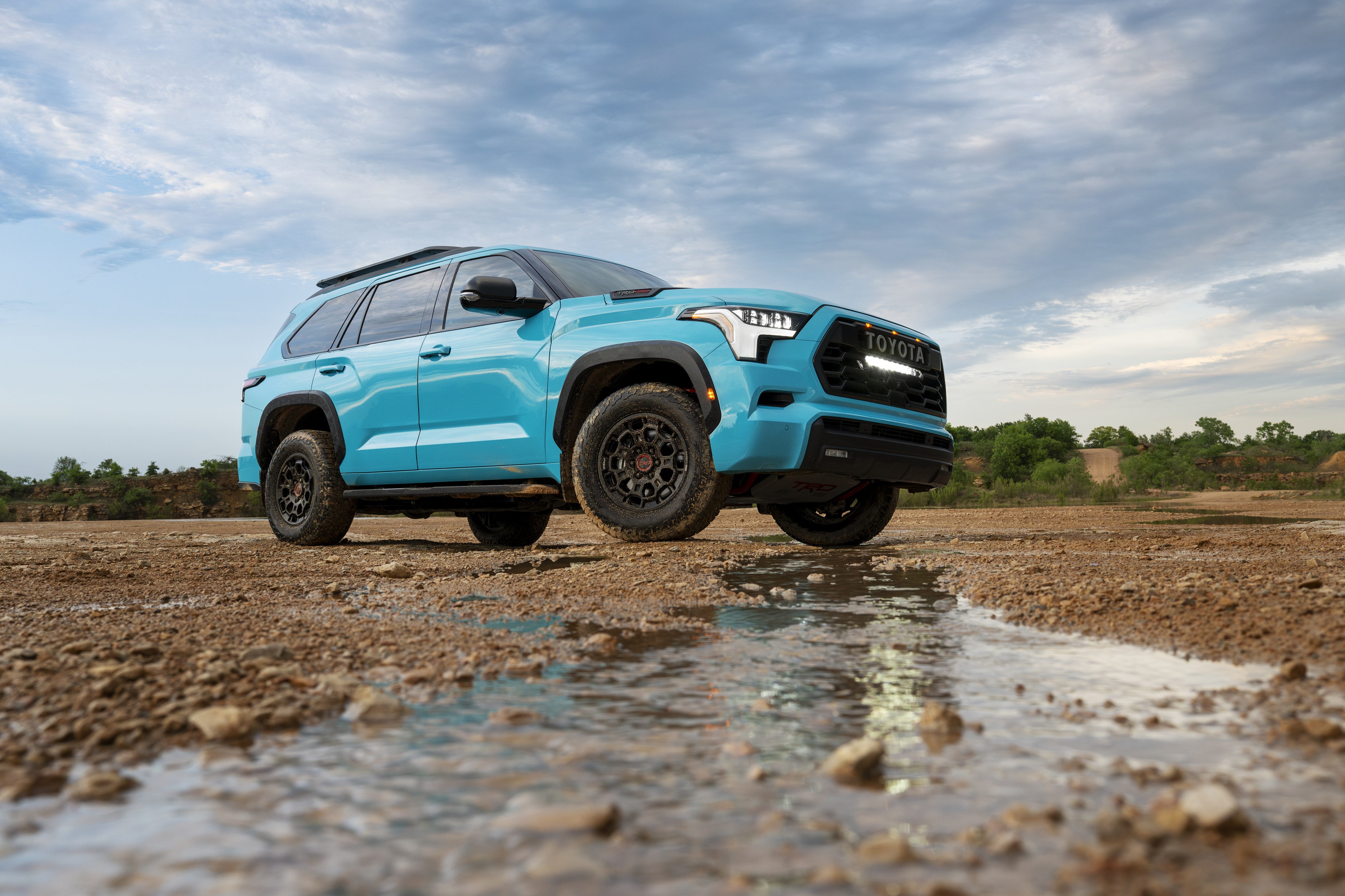
Both vehicles are rugged SUVs that can handle dirt roads, but the Land Cruiser is generally better-suited for this application. For starters, the Land Cruiser’s smaller size makes tackling technical, tighter trails easier. It also has the option of a front stabilizer bar disconnect mechanism, which improves suspension articulation.
Both have crawl control and a Multi-Terrain monitor, but the Land Cruiser gets a standard full-time 4×4 system. Rear-wheel drive is standard on the Sequoia, with part-time 4×4 being optional. As standard, the Land Cruiser has 8.7 inches of ground clearance, while the Sequoia has the same in SR5 RWD guise. You can get 9.1 inches of ground clearance with the Sequoia TRD Pro, but that model costs $81,565.
Departure, approach, and breakover angles are 32/22/23 degrees, respectively, for the Land Cruiser, a lot better than the maximum 23/20-degree approach/departure angles of the Sequoia TRD Pro.
Overall, while the Sequoia is a decent off-roader in TRD Pro guise, that model is extremely expensive, whereas even the base Land Cruiser is a solid dirt-roader.
5. Sequoia is Pricier and Has More Trims
Toyota
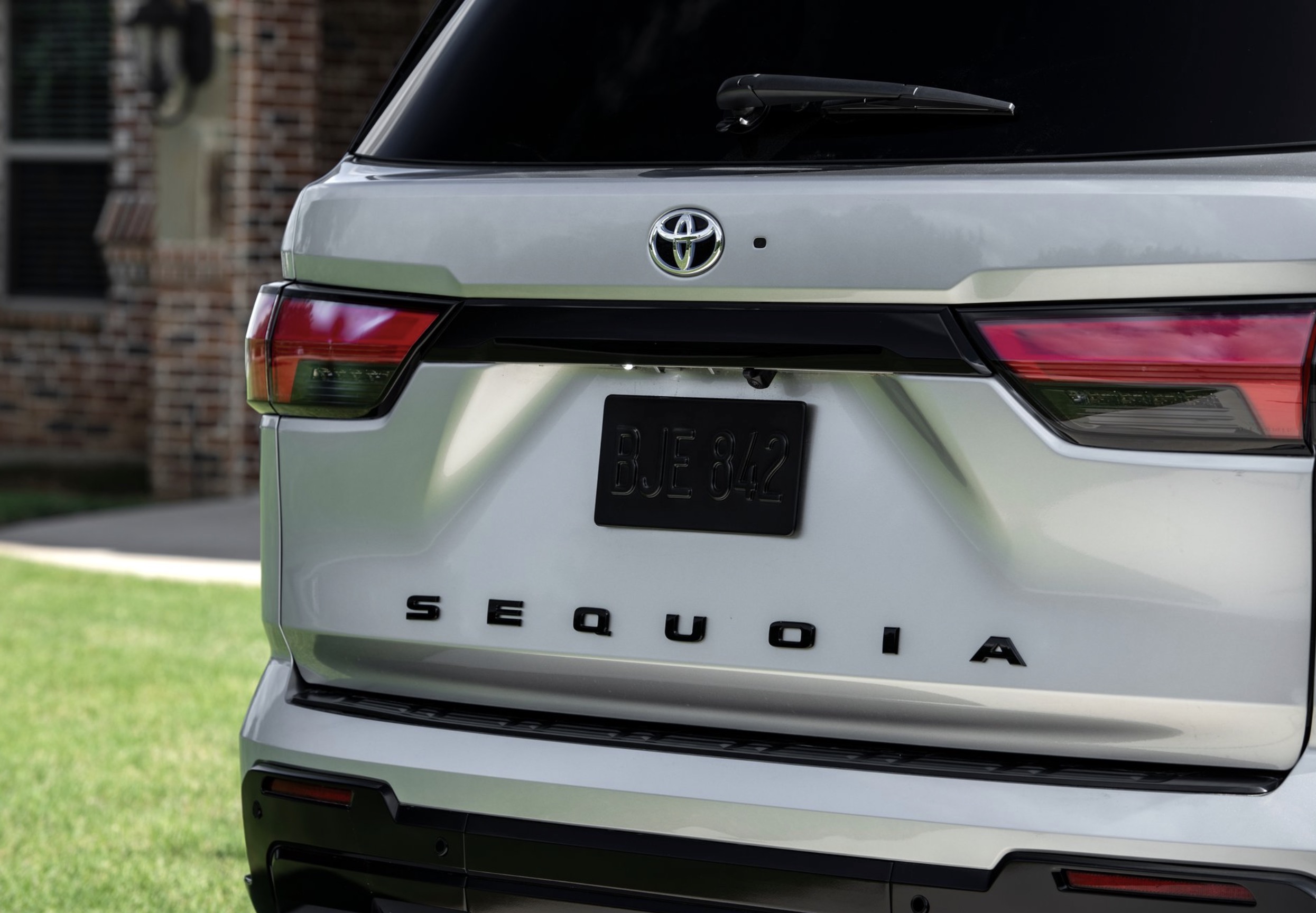
The 2026 Toyota Land Cruiser comes in just two trims, the 1958 at $57,600 and the Land Cruiser at $63,675. There’s a much broader Sequoia range, with six trims. Here’s a look at their prices:
- SR5: $64,825
- Limited: $70,595
- Platinum: $80,835
- TRD Pro: $81,565
- 1794 Edition: $81,650
- Capstone: $85,235
Ultimately, the Land Cruiser keeps things simple with two rugged, well-specified trims, whereas the top Sequoias push deeper into luxury territory. The Sequoia Capstone, for instance, comes with power-extending running boards, leather-trimmed seats, heated/ventilated front and rear seats, a power panoramic roof, a head-up display, and a 14-speaker JBL sound system.
Final Thoughts
The new Toyota Land Cruiser isn’t as imposing or powerful as the old one, but it’s a more approachable and affordable SUV than before. The hybrid powertrain blends good performance with fair efficiency, and the boxy looks speak to the vehicle’s rugged nature. If you want a midsize off-roader and don’t need to seat more than five people, it’s perfect.
The Sequoia answers the need for more space and power, but it struggles to match the versatility of direct rivals like the Chevrolet Tahoe and Ford Expedition. Its towing capabilities are brilliant, though.
If you can settle for a midsize SUV, the Land Cruiser is easy to recommend. But if you need something bigger, we suggest considering rivals from Chevy and Ford before settling on the Sequoia.
About the author

Karl Furlong
Senior Editor, Autoblog