
The Underdog Story
If there is an underdog story that has become a trope in some of our favorite Hollywood movies, it would go something like this: a powerful, commanding figure takes control of a once great, but downtrodden and down on its luck team or school, spends some time wrangling it back under their control to experience its glory once again.
We can spend all day naming movies with this exact same plot line. Coach Carter, Lean on Me and Moneyball are all films that follow and explore these themes and moreover, they’re based on real people and true stories. However, there is one underdog story that has not had the Hollywood treatment just yet. The story behind NUMMI is about an American automaker taking a chance on something that was broken and trying something different to bring it back up again.
Turning Japanese
In the early 1980s, economic conditions in the United States steered American buyers toward more affordable, smaller and fuel efficient economy cars, which were often more than not, made by Japanese firms like Datsun (known today as Nissan), Honda or Toyota.
The 1979-1980 oil crisis triggered a crisis for Detroit’s Big Three, as they faced disastrous financial difficulties. In 1980, American automakers and suppliers collectively lost a record $4.2 billion, as sales dipped to all-time lows. As a result, an estimated 300,000 to 500,000 auto workers were either laid off or furloughed, which saw membership of the United Automobile Workers (UAW) union decline by 40%.
Not a lot of Americans purchased new cars during this time, but if they did, it was probably smaller, imported and Japanese. According to a May 1980 report from The New York Times, Toyota’s U.S. shipments rose 25% in the first four months that year.
Detroit’s automakers failed to meet the growing demand for smaller cars. During President Reagan’s first few months in office, his Administration successfully applied pressure on Japan’s Ministry of International Trade and Industry (MITI) to impose its own limit on U.S.-bound auto exports. What came out was something called the Voluntary Export Restraint (VER), between the U.S. and Japan, which took effect on May 1, 1981.
From 1981 to 1983, the Japanese agreed to limit exports to America to 1.68 million cars, which increased to 1.85 million in 1984. Under VER, the price of Japanese-made cars in the U.S. naturally rose as the quota kept demand very high. However, this period also led some Japanese automakers to begin exploring U.S. local manufacturing to avoid these export restraints.
Jerry Telfer/San Francisco Chronicle via Getty Images
The Worst Car Plant in America
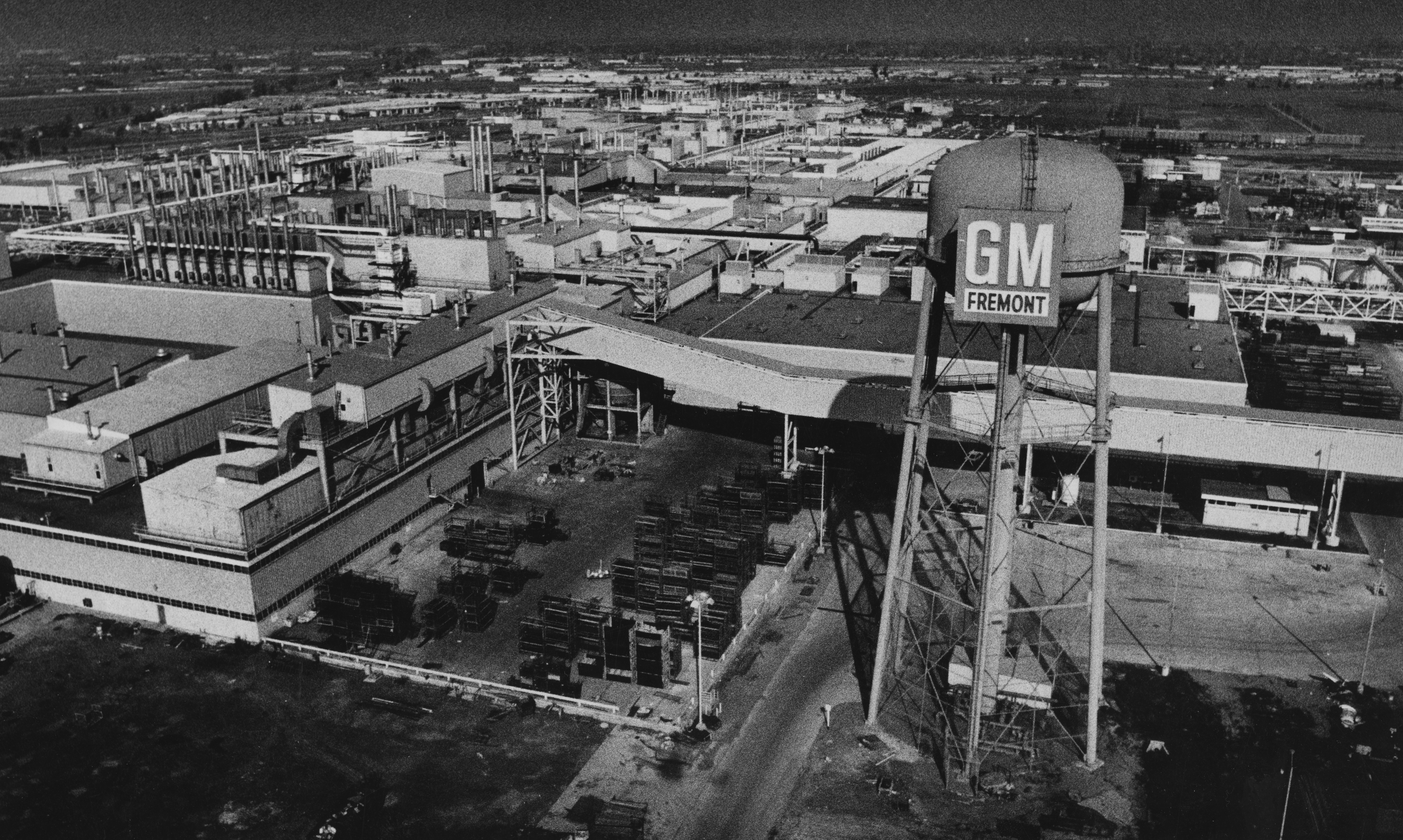
In 1984, two of the world’s biggest automakers, General Motors and Toyota, decided to do something that seemed almost impossible: run a car factory together in Fremont, California. That plant was called NUMMI, which stood for New United Motor Manufacturing, Inc., and its story started with failure.
GM had previously closed the Fremont plant in 1982 because it was a nightmare. Bruce Lee, who ran the western region for the United Auto Workers (UAW) and oversaw the Fremont plant, said in a 2010 episode of NPR’s This American Life that “It was considered the worst workforce in the automobile industry in the United States,” adding that “it was a reputation that was well earned” due to strikes and other general chaos that occurred on the job. Rick Madrid, who worked at the plant mounting tires, told NPR that the plant’s workers had a laissez faire attitude towards car production; that is if car production actually occurred.
“When I was mounting tires, we’d drink,” he said. “I’d bring a thermos of screwdrivers with me.”
The vices that workers engaged in at the plant were beyond just drinking. Some would sell drugs at the plant, and some even engaged in other extracurricular activities. Billy Haggerty, a hood and fender assembly worker at the plant told NPR that there were so few workers some mornings, managers didn’t have enough able bodies to start the line. Some workers even hated management so much, they sabotaged the vehicles, going as far as placing Coke bottles inside the door panels so it’d rattle and annoy customers.
Toyota
Dirty Car? Shop Chemical Guys Specials: Up To 40% Off
Disclaimer: If you buy something via one of our links, we may earn a commission.

Chemical Guys Basic Wash and Wax Kit: 28% Off
Get a high foam wash with Mr. Pink, then wax your ride the easy way with Butter Wet Wax.

Chemical Guys Exterior Starter Kit: 33% Off
Upgrade your wash routine with the Clean Exterior Starter Kit.


Chemical Guys Streak Free Glass Cleaner: Just $9.99
Ammonia-free formula is safe for all window tints.
An Unlikely Partnership
By 1982, GM closed the plant. It was GM’s worst factory, and closing it seemed like the only option. However, Toyota had never run a factory with American workers before, and they wanted to see if the famous “Toyota Production System,” the manufacturing approach that made Toyota one of the most efficient automakers in the world, could work with American workers.
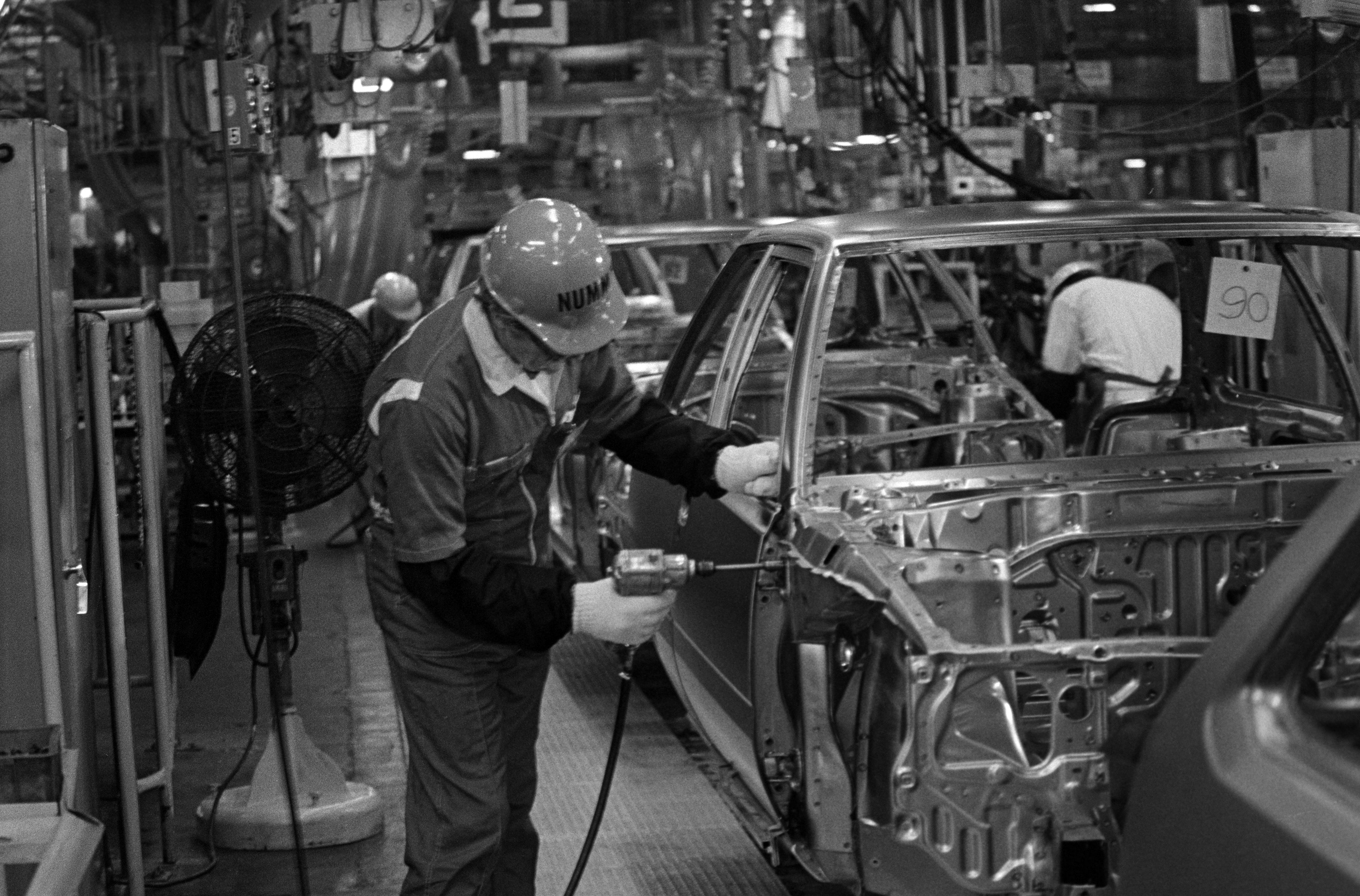
When NUMMI reopened in 1984, Toyota hired back the same workers who previously worked for GM; the same people who admitted to drinking on the job and fought with managers. However, this time around, the plant became one of the best in the entire GM system. The workers were the same, and so was the factory. But, everything else was different.
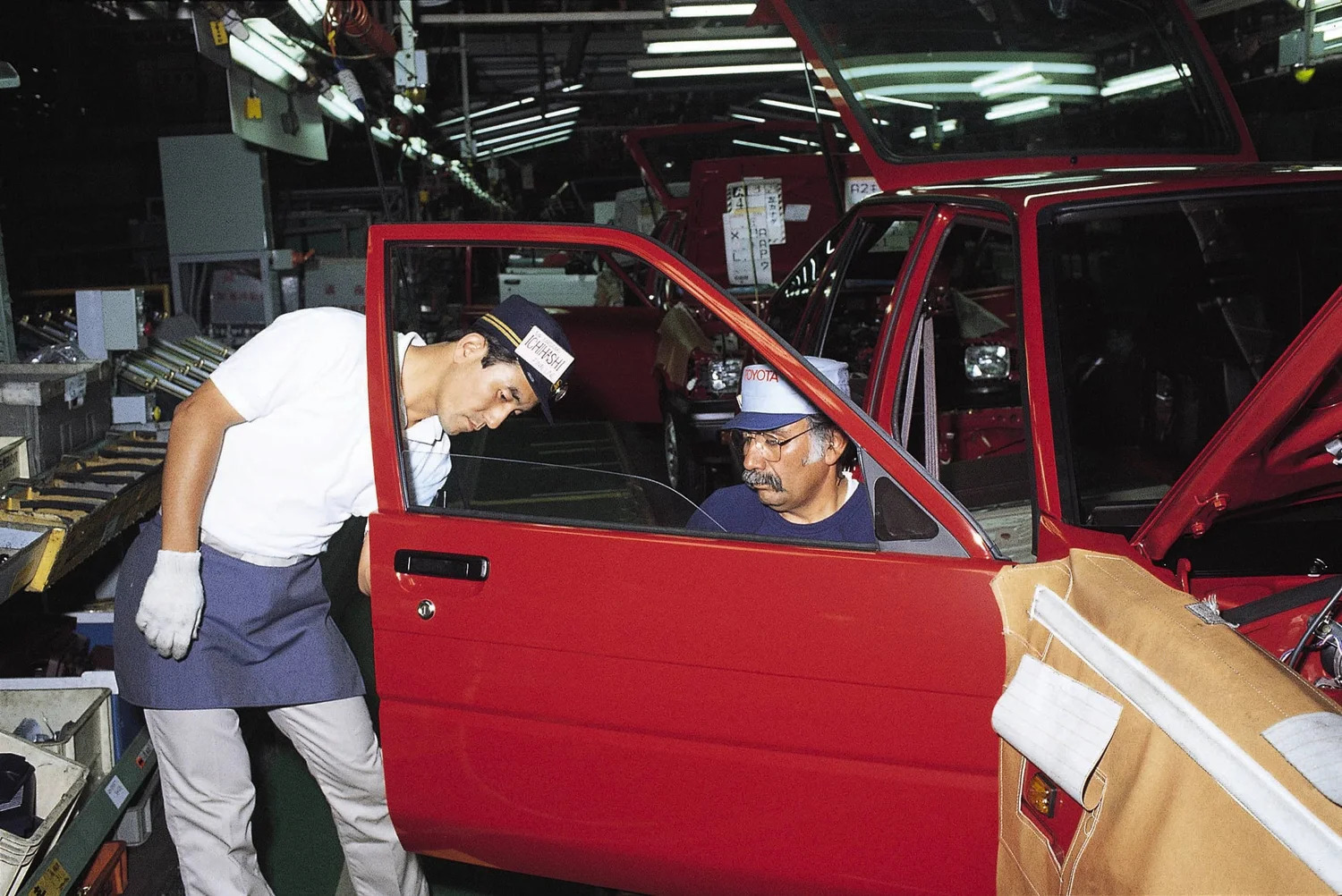
Toyota didn’t just bring new equipment or machines, they brought a completely different mindset behind factory management. In the spring of 1984, Toyota started flying groups of workers to Japan in groups of 30 to learn the Toyota system. Madrid was one of those workers, and what he saw there changed his mind about how a car factory should run: in harmony.
Kaku KURITA/Gamma-Rapho via Getty Images
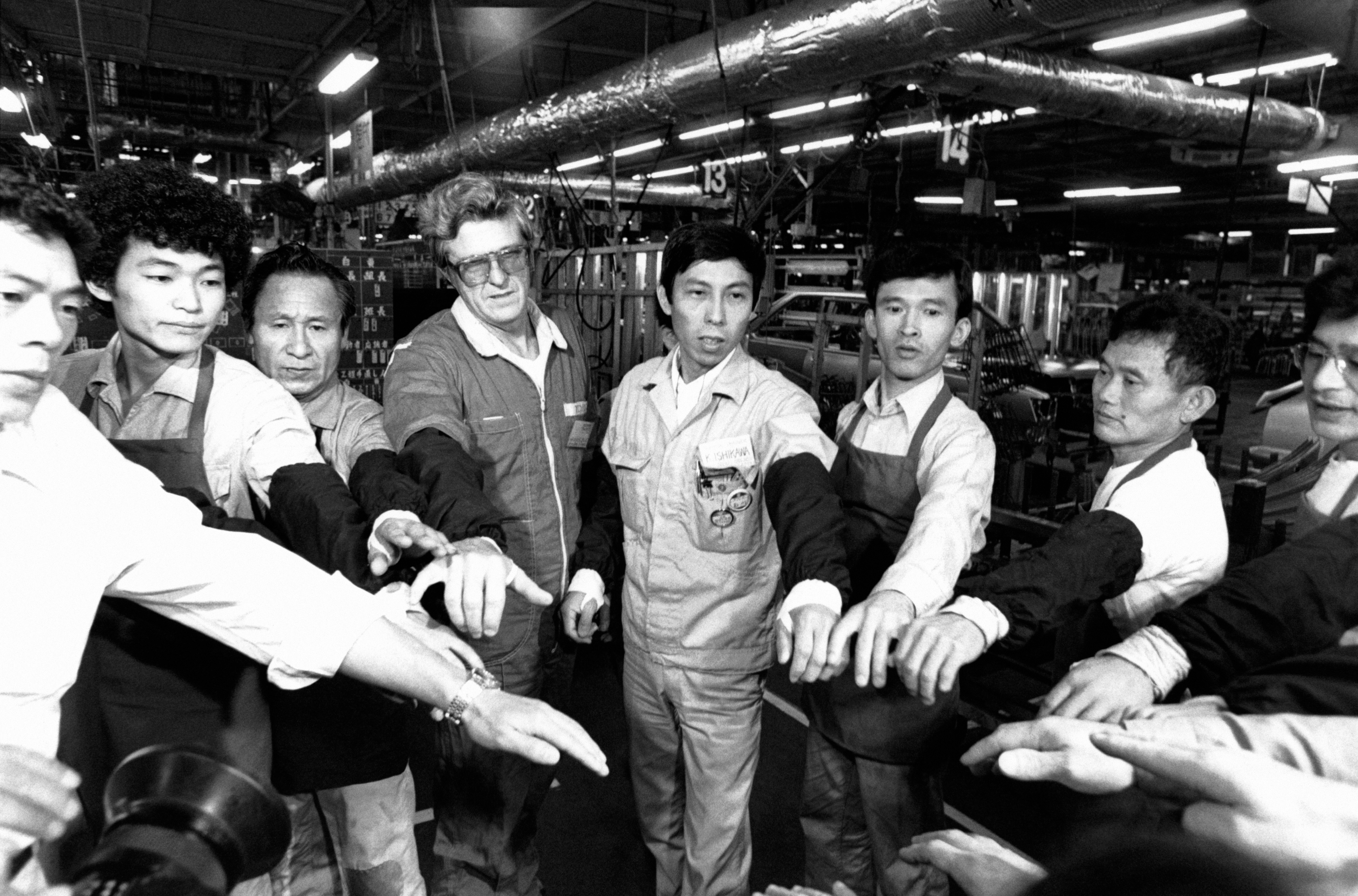
Kaku KURITA/Gamma-Rapho via Getty Images
He told NPR that on his visit to the factory, he watched a Toyota factory worker struggle with “a kind of a bolt, a cross bolt, that they’d put in wrong,” and watched in awe as they did something he’d never done before in any car factory: stop the line to fix a potential problem.
“They stopped the line and repaired it, which is take the bolt out, ream the hole, put the bolt back in, instead of sending it on and putting all the other junk on top of it so you have to take it off and repair it,” he said. “That impression, I said, gee, that makes sense. Fix it now so you don’t have to go through all this stuff. […] One bolt changed my attitude.”
Under the old GM system, stopping the line for whatever reason, even for a problem that could be catastrophic, was an unthinkable offense that Madrid, Lee and Haggerty would recall as being grounds for disciplinary action or termination. However, Toyota flipped it upside-down.
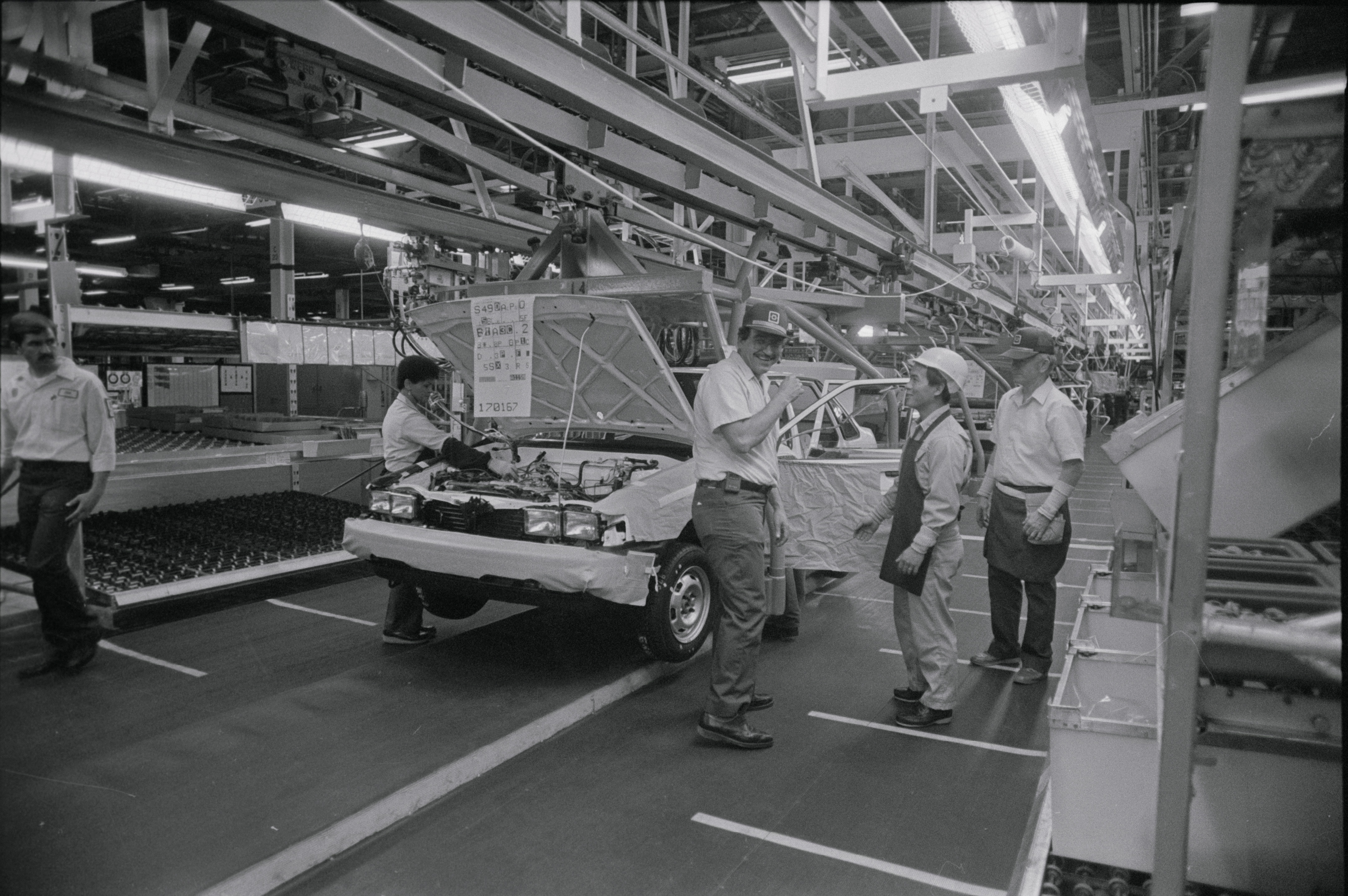
Bettmann/CORBIS/Bettmann Archive via Getty Images
At Toyota, a thin nylon rope called the “andon cord” ran above the assembly line, and any worker who spotted a problem could pull it. The first pull would summon a team leader to help fix the problem. If they couldn’t fix it quickly enough, the entire line would stop. This idea was insane to GM executives, but Toyota understood something deeper: it’s way more expensive to let defects go down the line. In addition, this sort of attitude is proven to be beneficial to the workforce’s morale.
In a 2010 MIT Sloan Management Review article, industrial anthropologist John Shook, who was on the ground leading Toyota’s training program, noted that GM execs were privy to allow such a system to exist at NUMMI, but argued that this tenet was key to Toyota’s industrial success.
“A key Toyota tenet is “Respect for People,” the conviction that all employees have the right to be successful every time they do their job,” he wrote. “Part of doing their job is finding problems and making improvements. If we as management want people to be successful, to find problems and to make improvements, we have the obligation to provide the means to do so.”
MICHAEL MACOR/The San Francisco Chronicle via Getty Images
Copying the model was not easy
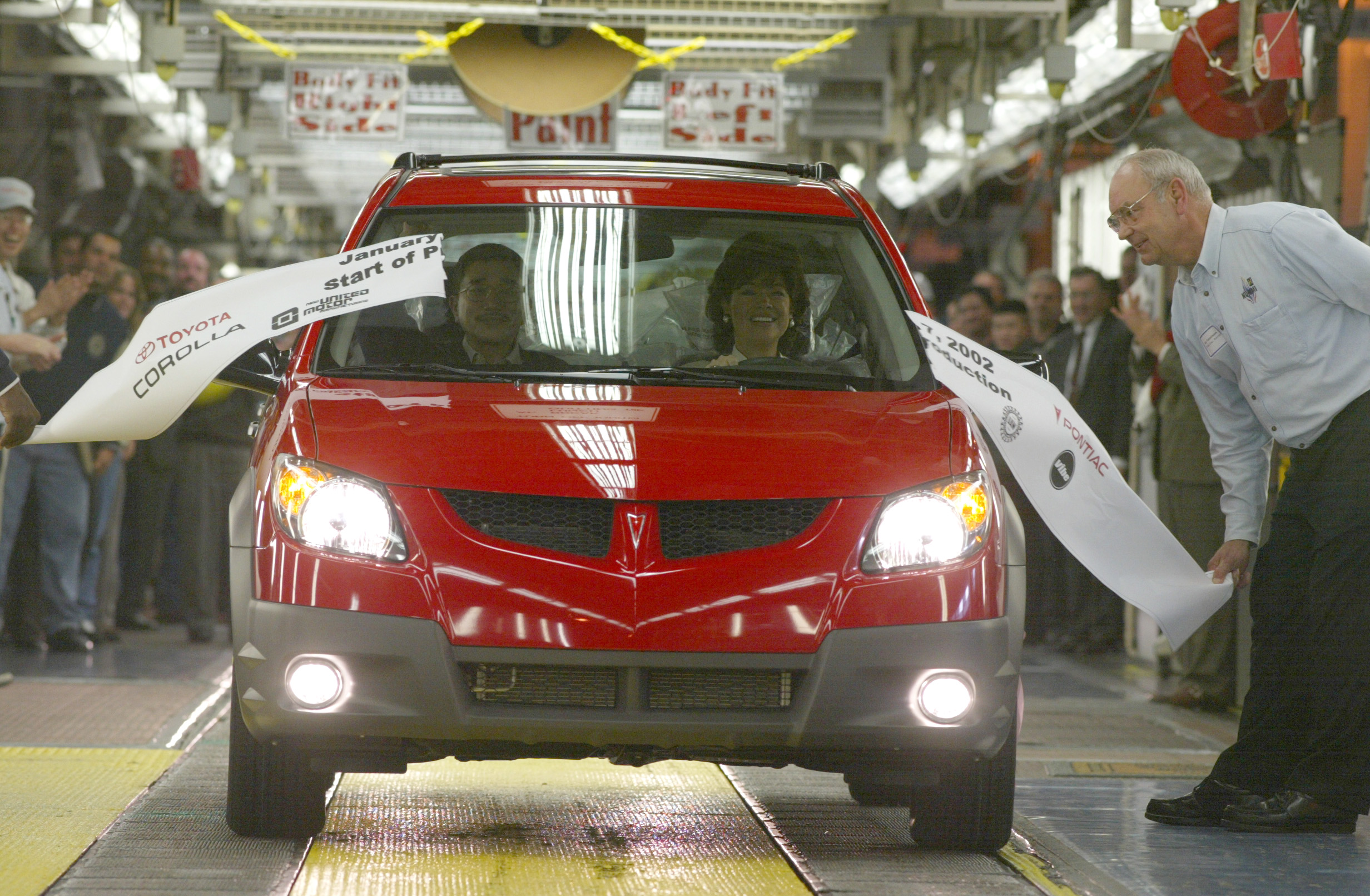
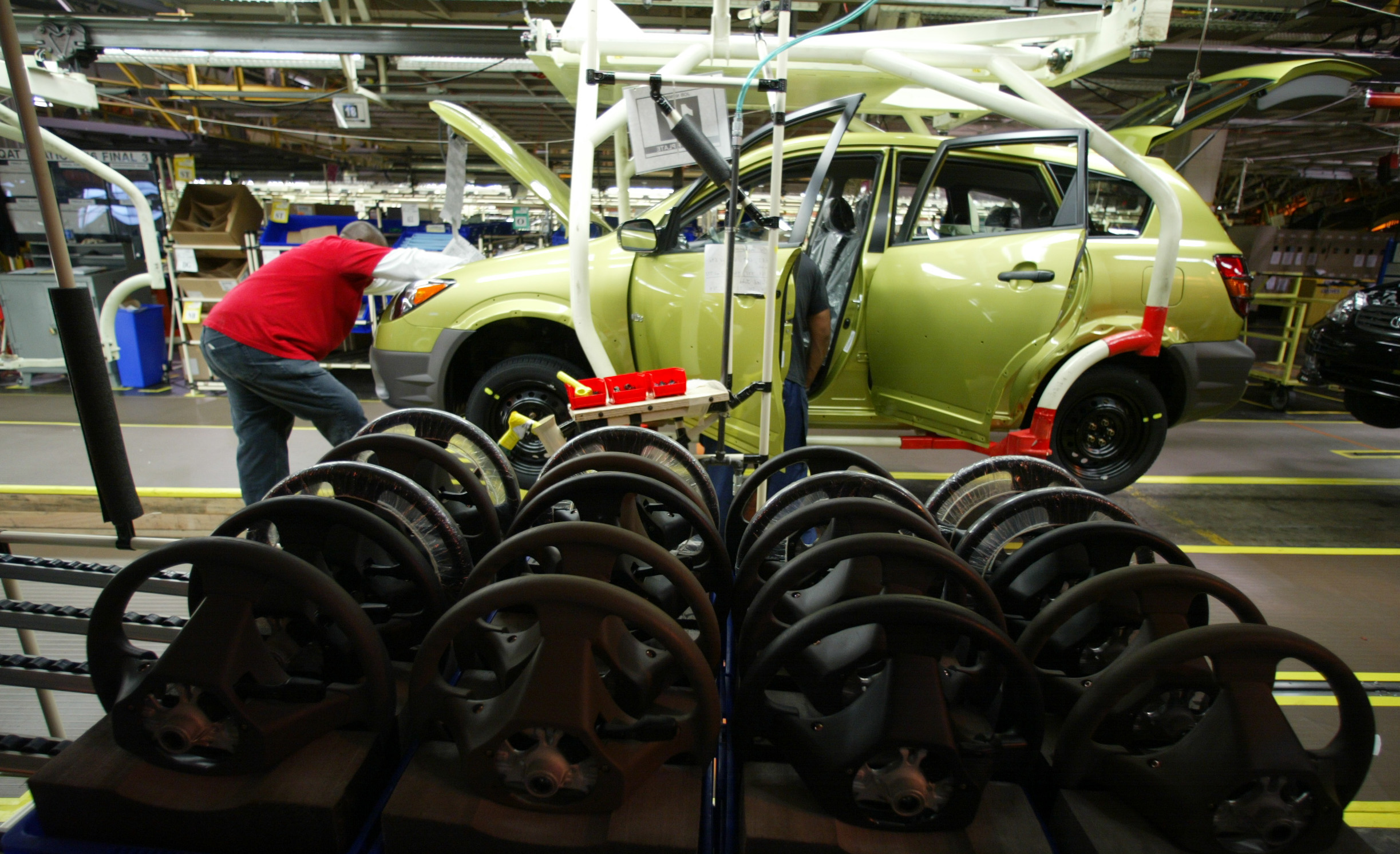
While it wasn’t easy, the NUMMI plant transformed from GM’s worst plant to its very best; an improvement that was achieved in just one year, and with the same workforce. A wide variety of Toyotas and GM products called NUMMI home, including the Chevrolet Nova (a badge-engineered Corolla), the Geo and Chevrolet Prizm, the Pontiac Vibe, Toyota Matrix and Japan-exclusive Voltz, as well as other Toyota products, including multiple generations of the Corolla and the Toyota Hilux and Tacoma pickups.
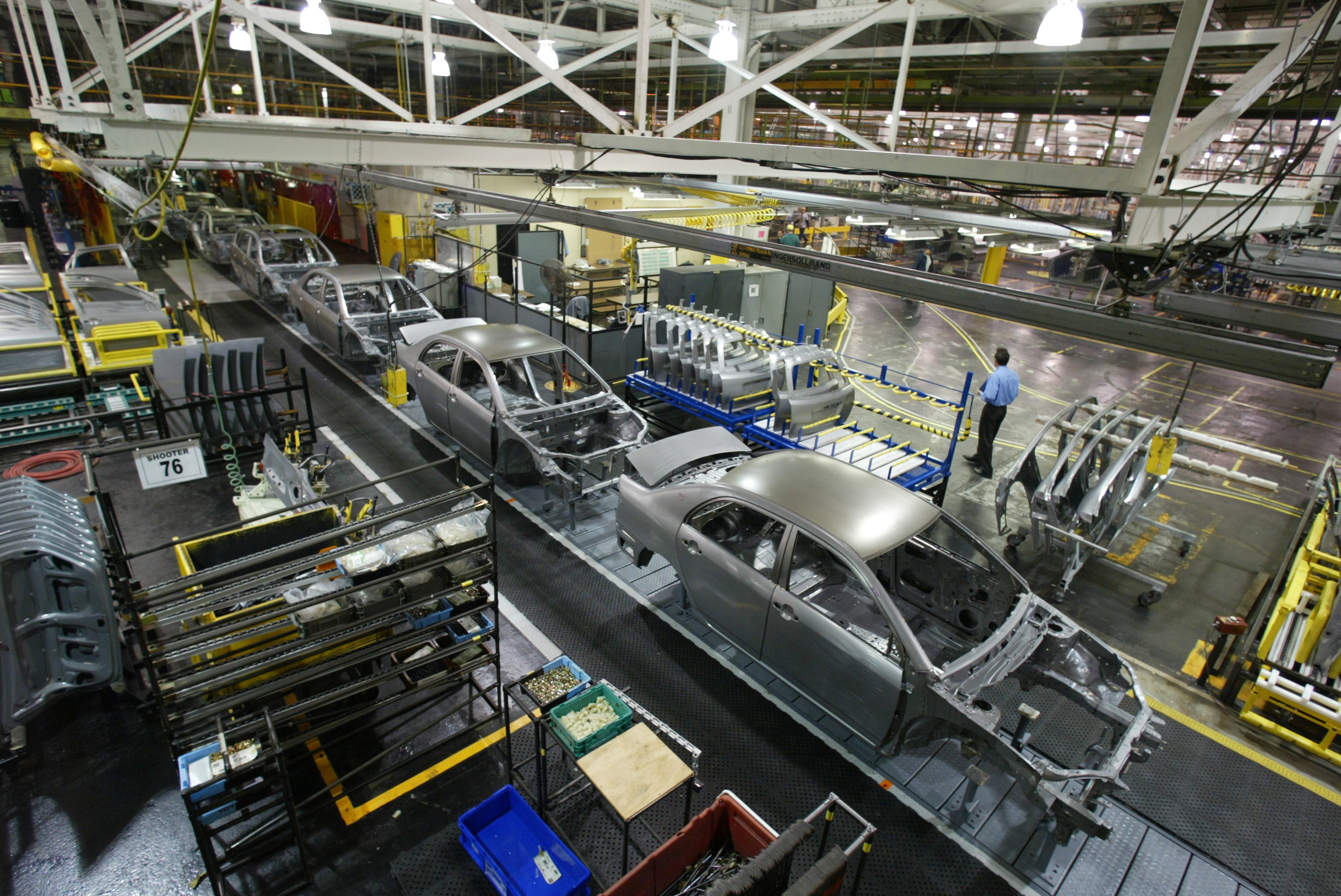
Up until its closure in May 2010, the NUMMI factory built an average of 6,000 cars a week and about eight million cars and trucks since it opened in 1984. But although GM essentially got the “secret sauce” from Toyota, it wasn’t exactly successful in rolling it out across its plants. In NPR’s retrospective, NUMMI workers Lee and Larry Spiegel recalled an unsuccessful attempt to implement the Toyota system at GM’s Van Nuys plant, which faced massive resistance.
MICHAEL MACOR/The San Francisco Chronicle via Getty Images
“There were too many people convinced that they didn’t need to have to change,” Spiegel recalled, adding that managers at Van Nuys also opposed stopping the assembly line because their bonuses depended on the number of cars that rolled off the line, no matter the quality.
In 1992, GM closed the plant. In his piece for the MIT Sloan Management Review, Shook noted that what made NUMMI work was a much deeper shakeup than what is present at surface level, adding that systems like Toyota’s Andon system required both workers and managers to adopt a different perception to the concept of problems and problem solving.
“The andon process is about building in quality by exposing problems,” he said. “Sometimes those problems are of our own making. Exposing them can be a very personal and threatening matter.”
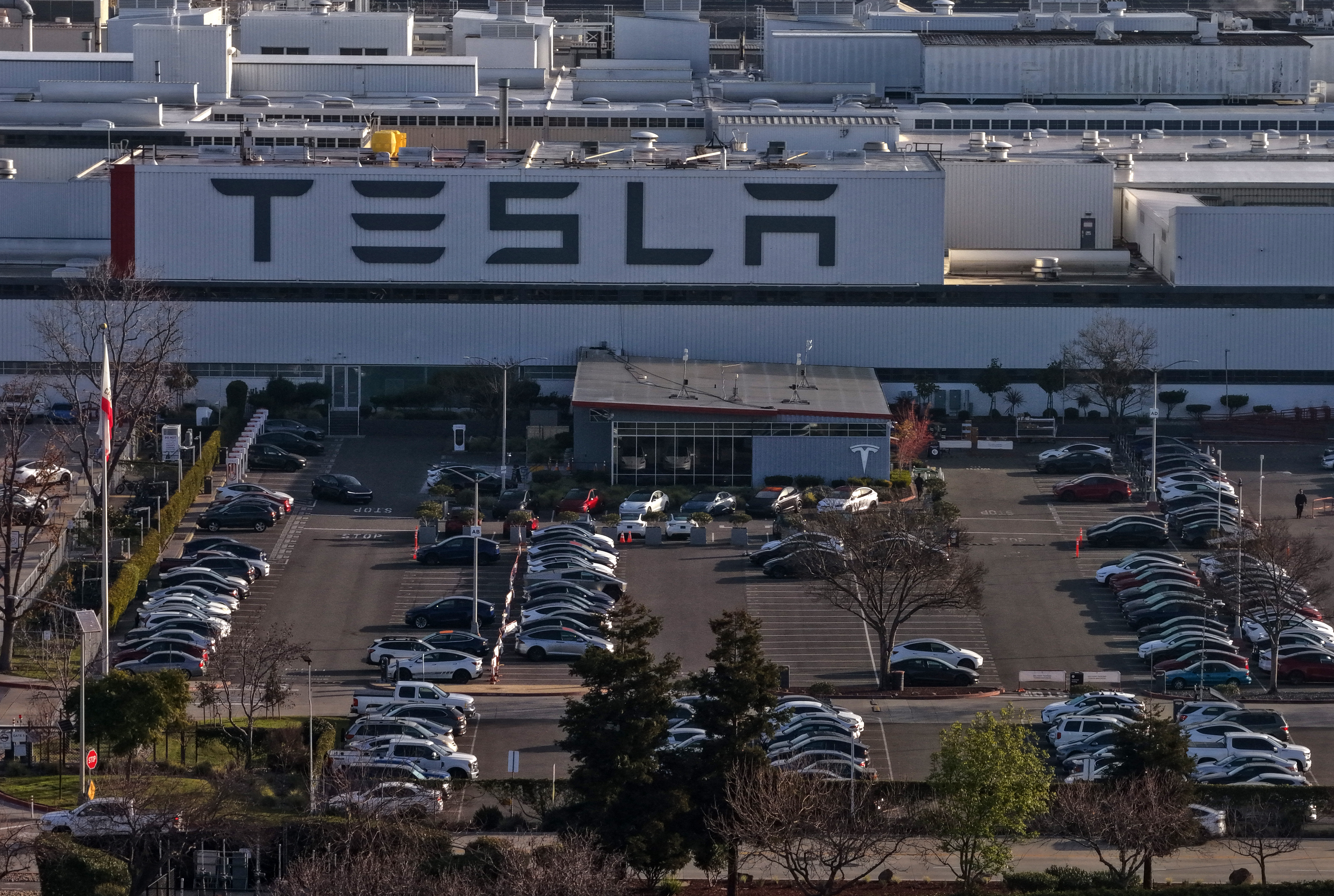
Photo by Justin Sullivan/Getty Images
The Legacy
The NUMMI experiment ran for 25 years, ending when Toyota closed the plant in 2010 after GM went bankrupt in 2009 and pulled out of the joint venture. However, the factory didn’t stay empty. In 2010, Tesla bought the facility, and to this day, it is where the electric car company builds the lion’s share of its cars.
However, it isn’t planning to make just cars at Fremont. During its recent Q4 2025 earnings call, Tesla CEO Elon Musk confirmed that production of the Model S and Model X will end by midyear in 2026, noting that the production lines will be removed to accommodate full-scale production of its Optimus robots.
Overall, the NUMMI story is a very fascinating case study into organizational change and corporate culture, and how they affect manufacturing, management and how organizations work. It shouldn’t be surprising if a burgeoning Hollywood screenwriter decides to take on this story; it’s Gung Ho, for real.
About the author

James Ochoa
Senior Editor, Autoblog