
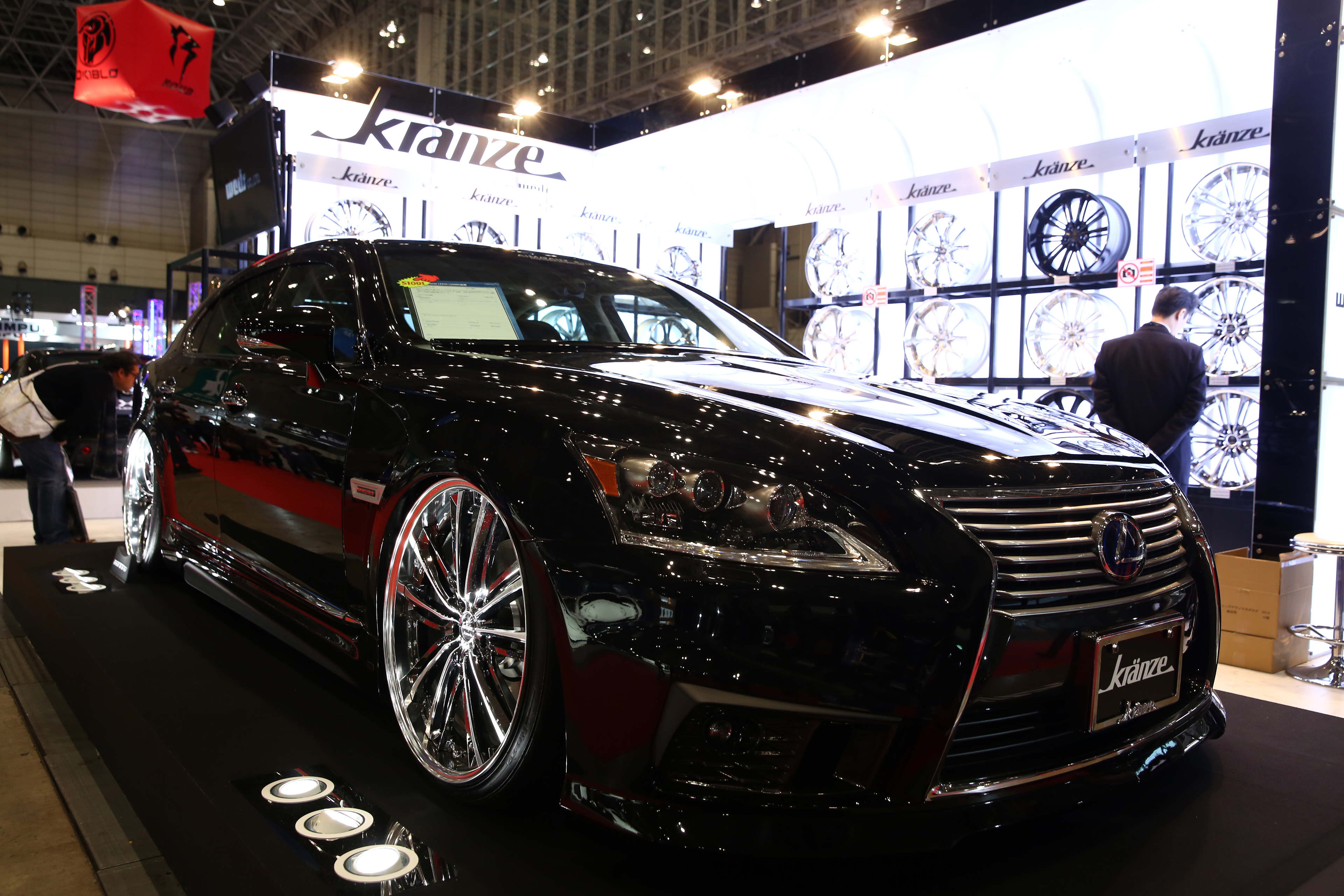
Japan’s modified car culture has influenced American gearheads for generations.
Long before the first Fast and the Furious films became successful summer blockbusters at cinemas, the Japanese have been a sort-of high octane north star for American car culture. Over the years, video games, imported media and magazines such as Initial D and Video Option, active internet forums and even social media communities have provided enthusiasts and creatives alike with an endless stream of inspiration from the motherland.
As a result, it seems that no two modified Japanese cars are alike, as a diverse array of enthusiasts take bits and pieces of inspiration from different subcultures to incorporate into their own unique rides. At any given car show in the summer, one can expect to see everything from Nissan 240SX drift missiles, heavily modified, four-digit horsepower Toyota Supras and Nissan Skyline GT-Rs, as well as a variety of ‘slammed’ or ‘stanced’ vehicles that sit low to the floor on expensive Japanese wheels.
But while most modified cars stand out to make a bold statement about their owners, their personalities, and/or their disregard for certain social or political norms, a much more subtle and buttoned-up form of customization has emerged from its niche Japanese community of enthusiasts to mainstream appeal. It’s called VIP style; and it’s for the very important people who feel like badasses in suits and ties.
Where did it come from?
Like most modern automotive phenomena such as drifting, kanjozoku or itasha, the VIP-style car phenomenon has its origins in the land of the rising sun: Japan. Many of the aftermarket parts producers that serve this community, such as Junction Produce, Wald and Aimgain, are based in the island nation.
But while drifting has its origins in the country’s mountain roads and itasha has its roots with anime and manga-obsessed otakus, there is no clear origin or timeline to where VIP style exactly began. While the term ‘VIP,’ is meant to represent its original meaning; an acronym for ‘very important person,’ common legend has it that these cars were inspired by those favored by those involved with certain figures in Japan’s underworld; the Yakuza, Japan’s mafia-like organized crime groups.
However, in a 2008 Speedhunters post, contributor Mike Garrett noted that the idea may be false, instead crediting the rise of the phenomenon as an evolution of the outwardly loud and brash Bosozoku and Yankii style of modification, low, wide-bodied cars that were inspired by 1970s race cars. In addition, he mentioned that some recognized that the VIP style came about during the early 1990s in Osaka when street racers ditched their sports cars and began to modify innocuous and subtle-looking sedans in the style of European sports sedans (a la AMG) to covertly cruise the streets away from police attention.

Aimgain

Aimgain

Wald
Tailor made to be luxurious
But despite its cloudy and indirect origins, many enthusiasts and admirers in both Japan and in the West have been turned onto VIP-style cars for their outward display of restraint and opulence.
You may have seen VIP-style cars if you are familiar with the slammed or stance car scene, as a smattering of these cars may already populate your social media feeds or even at car shows that you may have attended. They share many of the same characteristics. Like stanced and slammed cars, VIP builds are defined as being extremely low slung vehicles that sit on sophisticated air suspension or adjustable coilover suspension systems, as well as sporting a cool set of wheels.
However, the comparisons stop there. While most cars can be slammed for a stance build, VIP-style cars are typically restricted to modified luxury sedans; rear-wheel-drive four seaters, primarily those from Toyota, Nissan and Honda’s premium offerings such as the Toyota Celsior, Crown, or the Nissan President. Domestic versions of said vehicles such as the Lexus LS and Infiniti Q45 have been adopted by followers of the VIP style in the U.S.
In a nutshell, the best way to describe the spirit of a VIP-style car is a caricature of how opulent a privately-owned limousine would be, or the personal car of a fictional street racer whose day job is a chauffeur. Think Kato, except if the Green Hornet rode in a Toyota Crown instead of an Imperial.

Aimgain

Aimgain
Subtle on the outside, party on the inside.
Keeping with the themes of subtlety and opulence, most VIP-style cars start off as monotone-colored cars that recieve very subtle exterior modifications that enhance the car’s luxurious image. These include larger or more prominent grilles and simple and discreet body kits that hug the car’s original lines, though some cars may also feature more advanced LED-powered headlights and taillights that mimic those of more expensive luxury cars. To enhance and emphasize the ‘VIP’ in the VIP style build, some owners may also go as far as installing additional items such as window visors/rain guards and even flagpoles, like those on a diplomatic-issued vehicle.
In addition, another prominent, must-have feature in VIP-style cars are expensive, multi-piece alloy wheels. Typically, these wheels are three-piece designs that add a sense of ostentatious flair to a muted theme, as they feature significant amounts of chrome and come in large diameters of 19-20 inches and above. Wheels from Japanese manufacturers such as Weds, SSR, Work, Lowenhart and Rays/Volk Racing are commonly used, though some VIP-style cars have incorporated wheels from Western manufacturers such as HRE and BBS.

TKOIII via Wikipedia Commons

Tokumeigakarinoaoshima via Wikipedia Commons
But while the exterior of VIP-style cars are kept sleek and subtle, the interior is where the VIP in VIP-style comes into play. Here, every effort to enhance the cabin’s level of comfort and opulence is taken into account. Though some builders would go as far as adding wood grain and reupholstering seats in diamond-quilted leather, a smattering of interior accessories such as those made by brands like Junction Produce and Garson D.A.D. help to define the level of aspirational luxury that their owners picture in their minds.
Ornate seat and dashboard-mounted tables, champagne flute holders, lace seat covers, mood lighting, leather-wrapped lumbar, neck and accent pillows, rear window curtains, rear-view mirror-mounted knotted ropes and tassels are common accessories on these cars. At the same time, some owners may go all out and install more daringly opulent accessories onto their VIP-style cars, not limited to headrest-mounted screens, elaborate trunk-mounted audio systems and even rear seat chandeliers.

Aimgain

Aimgain

Aimgain
VIP style has evolved
Beyond Japan, the influence of VIP style has spread around the world. These days, enthusiasts have applied these elements to everything from US-market Lexus, Infiniti and Acura models to even European luxury cars and domestic-origin vehicles such as the Chrysler 300. In fact, the vehicles where this modification style appears has evolved and spread past traditional large luxury sedans, to unconventional vehicles such as minivans and even the Toyota Prius.
Many of today’s attention-grabbing modified vehicles, such as those found on social media and on the floor of the SEMA show, have significant performance numbers to boot. But given the way that this discipline has spread, it shows that one can create a “cool car” regardless of the pressures of high-performance.
In of itself, the VIP aesthetic is one that is aspirational; it proves that one can expertly craft a luxury cruiser made to one’s idea of opulence of grandeur. It proves that a car can be defined by its aesthetic, comfort, and luxurious swagger, which can make a statement that is undeniably head-turning without needing to be insanely fast.
About the author

James Ochoa
Senior Editor, Autoblog